“The presence of art in the world makes the world more like art.”
— Caleb Nussear
TV: Hi Caleb, thanks so much for doing this interview. I mostly know your sculptural work, especially what was installed in the gallery’s sculpture garden during our 2024 exhibition You Become the Changer. It was so cool to have those pieces in that outdoor space for an extended period of time, getting to watch them exist in different atmospheres, climates, and through various events. I’ve seen some of your other work as well and know you have a wide range of interests and stay busy on a bunch of different projects. I’m curious, what would being a successful artist look like to you?
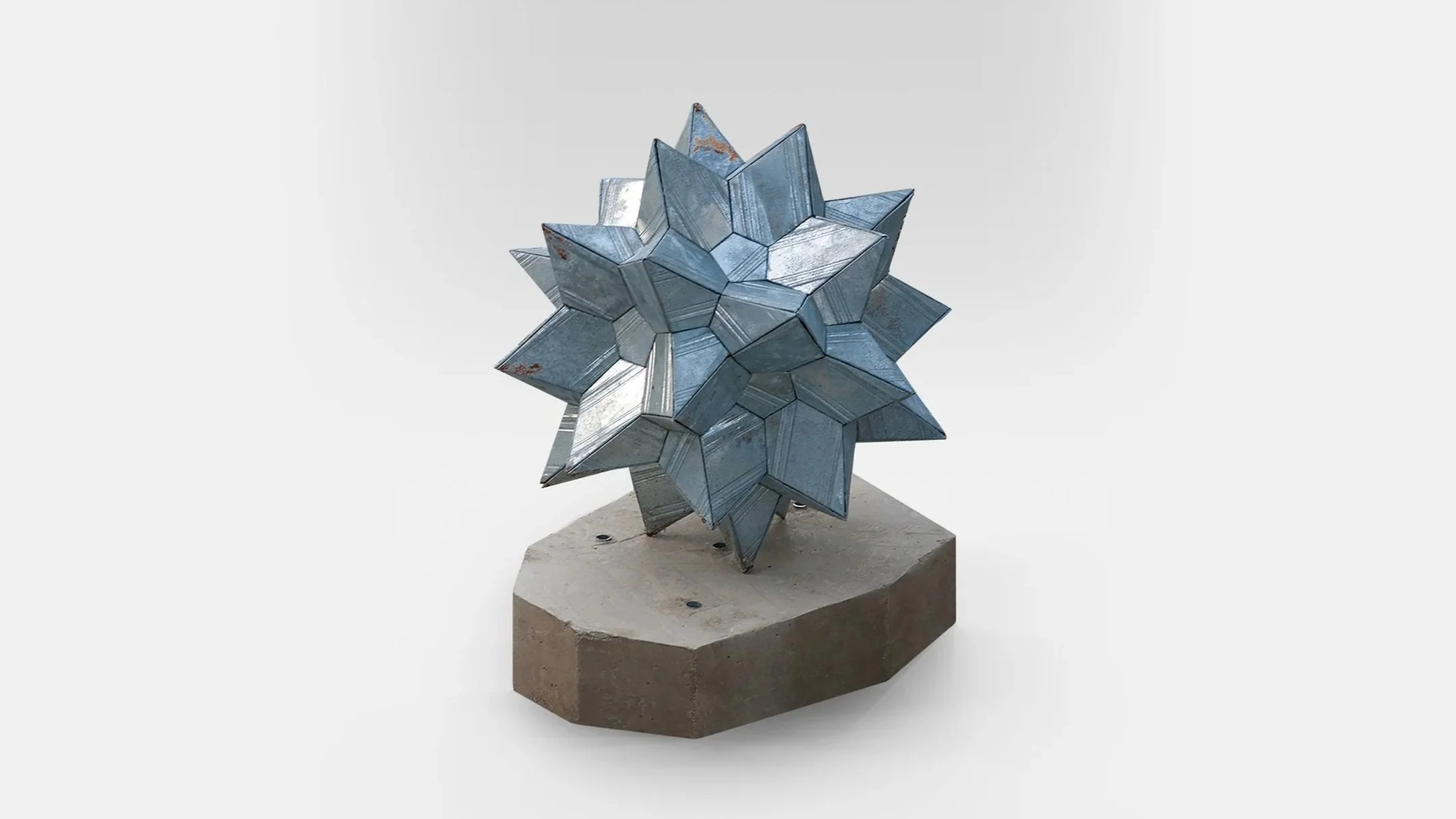
CN: Being a successful artist, for me, means quite simply to have the ability, desire, and available resources to make the work I was born to make, in the scale and scope that it is meant to exist. I have a good deal of that constellation in place already here in Brooklyn. When thinking about art and art-making I am a fatalist. I believe my art is an expression of my core being. Given the right conditions, the process of making, of creation, should flow quite easily. The big element needed for me is time - time to make the work. My work is very labor intensive so a single artwork can take months to upwards of a year. In the near future I'd like to accelerate the process a bit, for which I would need more time and possibly an assistant part time. Overall, the scale of my work can vary from the very small (6 inches square) to fairly large (the largest works I've made to date have been 10 feet in height and/or length. Working larger than that becomes very tricky when one considers material costs and logistics, storage, transport, etc. I make person-sized outdoor mirrored sculptures that are fabricated from mirrored glass, stainless steel, lead, aluminum, and fiberglass. I also make small and medium-sized folded paper drawings, which exist between 2 and 3 dimensions: they are very colorful, and are presented as framed wall works, although originally I presented them as table top displays. In addition to that, I do meticulous silverpoint drawings on gessoed panels; silver-type text drawings; reflective graphite drawings on black gessoed panels; and high-fired porcelain slip casts. Most of my raw materials I purchase these days and have delivered, although in the past I used to salvage a great deal of material, especially mirrors. Which I like, as a salvaged mirror usually has an extensive past life of other memories and desires.
To untie the complex knot of having more time in the studio, that is simply a function of selling more artwork, which thus reduces the need for outside jobs, which at present take up a great deal of my time. Right now I spend the majority of my time on installation crews in major museums, which is a rewarding and difficult occupation, but that does take significant time away from the studio.
TV: That sounds like a pretty ideal ambition. You must have a lot of projects in your mind that you’re eventually working toward. I wonder if while you spend time thinking about the future, you also look toward the past for any inspiration. Are there any specific movements or eras in art history that you feel most aligned with?
CN: Early on I was drawn to Surrealism (Ernst and Breton specifically, also De Chirico); Fauvism; Italian Futurism. At a point in my early 20's I became fascinated with Islamic geometry and tile work. Later, the works of sculptors Gonzalo Fonseca and El Anatsui; sculptor Monir Farmanfarmaian; architect Kengo Kuma were all very interesting to me for their scale, recursiveness, and optical brilliance. Also notably; choreographers Sasha Waltz and Peter Kyle. Contemporary dance is adjacent to my work and I've learned a great deal from dance, although for a long time I was unaware of the importance and proximity of dance to my practice.
On choreography and contemporary dance, I was completely unaware of the entire field until a chance meeting in 2013. I was exhibiting the first version of my penrose mirror sculptures at Marymount Manhattan College. A professor there, Peter Kyle, liked them so much that he requested a meeting with me. Over lunch, we got involved in a wide-ranging conversation, touching on movement, higher dimensionality, and how the human body can unlock doors into these states/places; from ordinary to extraordinary. I suddenly had the uncanny sense that Peter, whom I had just met, shared a part of my mind that I had always thought of as private because I had never met anyone who shared that sensibility. In the following months Peter invited me to a number of contemporary dance performances, including those of his own company. I quickly understood how powerful and adjacent contemporary dance is to visual art. From 2014 through 2019 I collaborated on 2 full length performances with Peter and various side projects. I also worked with his principle dancer Marielis Garcia on several of her own performances. The Rm~R 2 sculpture that was shown at Thomas VanDyke gallery comes out of this collaborative work - its twin Rm~R 1 was created for Move/ReMove by Peter Kyle Dance Company (held at Triskelion Arts; 2014) - their titles are inversions of the show title.
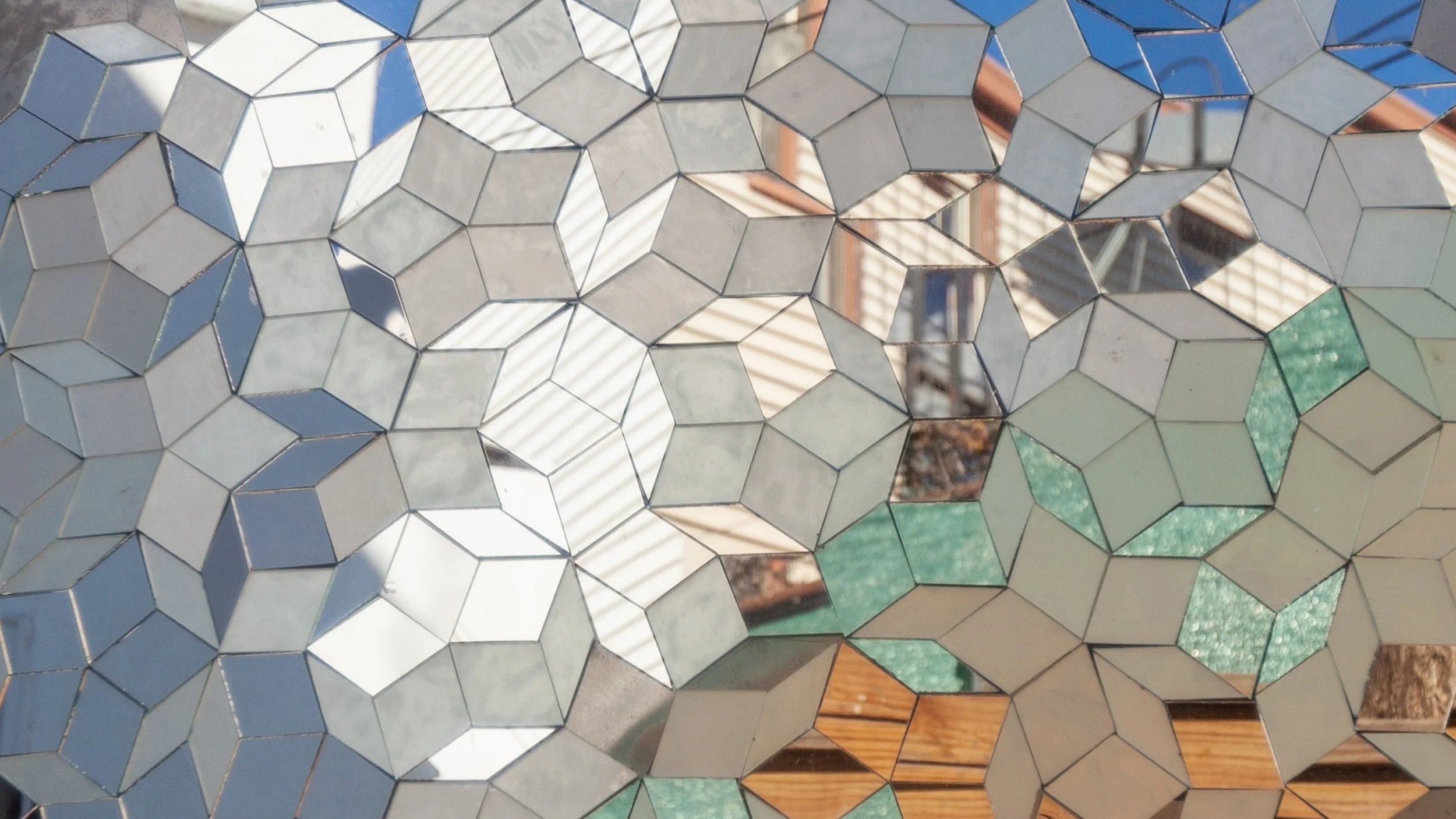
Choreography taught me things about movement and materials, and especially how the limitations and movements of my own body are expressive gestures that can determine the formal content of my sculptures and drawings.
TV: That’s a pretty cool range of influences, and something I love hearing from artists. Every person can collect their own pieces of what lights their minds up and apply it in their own ways. I don’t know if artists from the past thought about inspiring people in the future, but it certainly happens for me and many of the artists I talk to. In this vein, do you believe art can, or should, change the world?
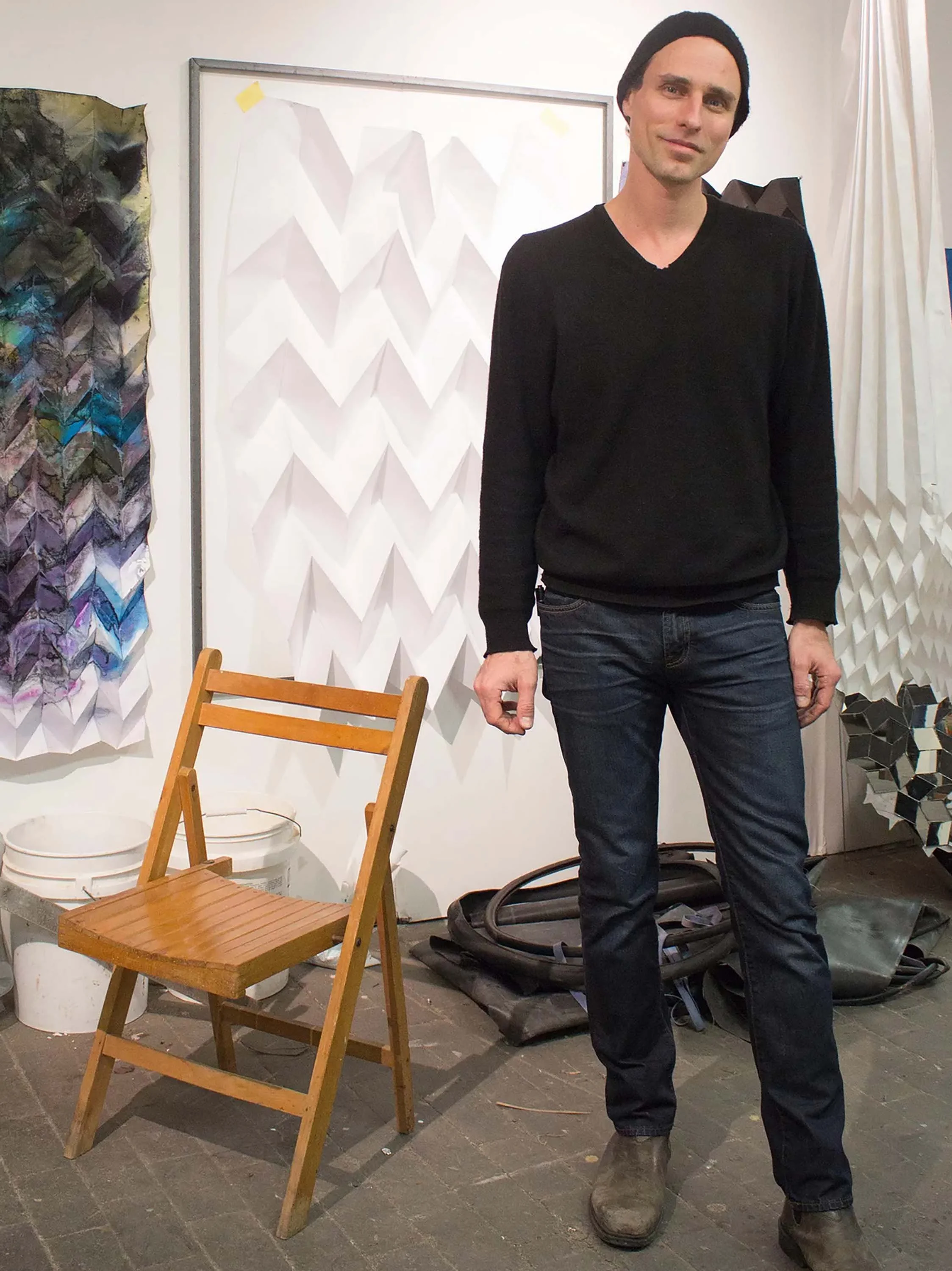
CN: I believe certain art changes the world simply by existing in the world; whether or not a human perceives it in any way. That notion has always informed my practice. For the artist, it should be enough to make the work, to give birth to it, to give rise to it. The artwork itself is a shard of a greater or higher dimensional 'real' that imposes its own structure on the world as it is in the present. This action or effect is comparable to how a great poem or mathematical theorem exists in the world, but also incommensurable with them. The presence of art in the world makes the world more like art: attuned to it to a greater degree.
TV: This sounds profound. I always think of songs as kind of like mathematical theorems, like, they exist somewhere in nature, they just have to be honed, or trapped, or found and recorded somehow. Like, before calculus was "discovered" it already existed, it just hadn't been documented and understood. I think the same with songs, they exist out there. Are you saying it's the same with art?
CN: Maybe. To get back to calculus - it's a great metaphor - which begins as a process of infinite, infinitesimal approximation (to the slope of a curve at any point along the curve). This derivative function gives a granular and detailed model of a complex and changing phenomena, that before the advent of calculus was resistant to accurate mathematical description. Artwork, for me, should map or describe the world, the complex and hidden parts of the world and how we experience it; the metaphorical, the esoteric. There is a great line from the Robert Duncan poem Often I Am Permitted to Return to a Meadow -- "wherefrom the shadows that are forms fall..". The artwork is a form that is a shadow of a higher dimensional realm that we can never 'see', only feel at the edges.
Of course, not all art is 'real' - potent in this way - there is a great amount of filler, and topical work, and empty signifiers floating around out there! What exactly constitutes this 'real' art is of course highly subjective and endlessly debatable - however, you should know it when you see it. It is a fact that much religious art and objects across myriad cultures have this aura; contemporary art can also attain this.
TV: So is it your job as an artist to make this distinction? Do you think about this while you are creating, like you are looking for something that you feel is defined as "real" art?
CN: I feel it is my job as a viewer, critic, and audience member to make this distinction, for myself, and to consider, revise, and stand by my convictions - to take the art presented seriously, and to critique it seriously. There is not enough real criticism in the art world these days, and there hasn't been for decades. Conversely, as the artist I don't think about this at all - I only try to follow my idea and impulse accurately and energetically. I can't judge the relevance of my own work, and have no desire to do so.
TV: It’s interesting to think of art as something personal, done to satisfy yourself, but also thinking about how it will be perceived and the effect it could have on an individual, a culture, a society, or to history in general. In this way, artwork is measured by some etherial form of success, but I’m curious about when things don’t work out the way they’re intended. In this vein, what would you say is your greatest artistic failure and what did it teach you?
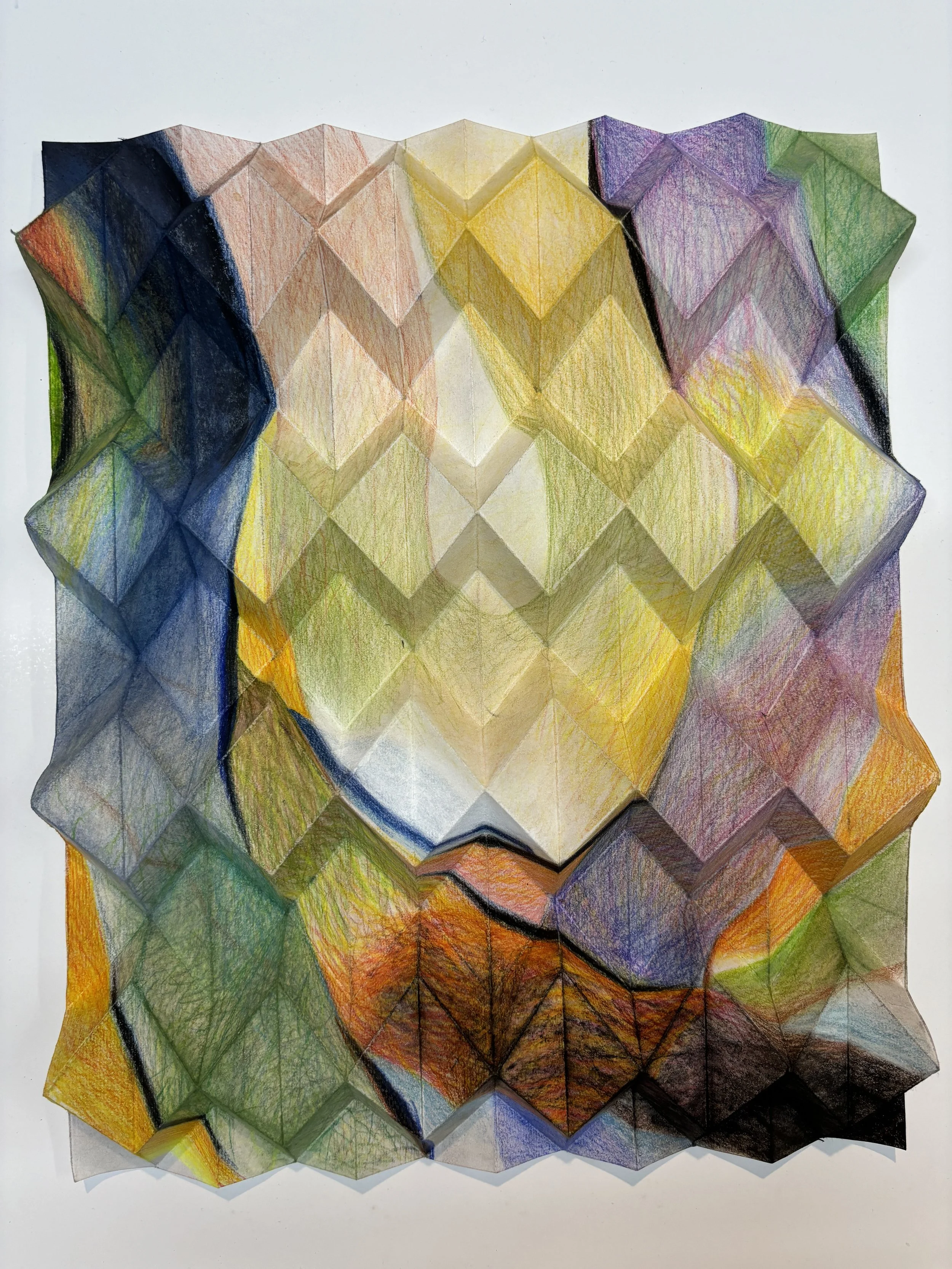
CN: I have great artistic failures all the time! In all seriousness; in my 20's I eschewed the figurative painting and drawing I was doing in my teens to focus on geometric abstraction. My color palette was strongly informed by the adjacent training I was doing as a ceramicist, using high-fired reduction glazes, as well as by the study of minerals and crystals as they are found in nature. During those 10 years of dedicated oil painting I was able to discover or manifest a handful of ineffably good canvases, but overall the work was a mess. However, another 10 years later, in my work with the Miura, these experiments came to fruition - color relationships are somewhat different in 3 dimensions. Geometry in 3 (and higher) dimensions is a stronger structure than in 2, etc. Perhaps it took time to understand my impulse toward sculpture. It's a strange fact that 19 out of 20 artworks that I make I am intensely unhappy with for several weeks to months after I finish them. It is only after I have some time away from the making process that I can see them anew and appreciate them. I have been showing work for many years, from my mid 20's until the present day. Usually if any one work is an out and out failure I will destroy it. Before I was speaking more about that my entire program of inquiry in painting was flawed. As I am largely self-taught, I couldn't really see that for a long time. Eventually I went smaller and returned to silverpoint drawing (which is very slow) and from that still point I was able to find my way out again, through the thinking activity of drawing.
The "Muira" is a class of folding patterns, or crease patterns, that compress a plane (sheet of paper, metal, latex, ceramic, etc) into a much smaller plane. Among other uses it is how NASA packs the large solar cell arrays into their satellites, where space is at a premium. When I discovered the Muira folding patterns my hands got obsessed with it immediately, and, without thinking too much about it, all of the old questions started to arise, although in the Muira they seemed to find their right place, quite serendipitous really! To get technical: spaces between dimensions fascinate me - the Muira exists between 2 and 3; the Penrose mirror sculptures exist between 3 and 4. I have yet to get to 5!!
TV: On a more personal note, what do you do for self care outside of your artistic practice?
CN: I play tennis. I have 3 cats. I buy organic - and spend time making food with my girlfriend. I spend time in movement, outside, daily. I've always been an outdoorsy, physical type of person. I was raised largely without TV and movies, which continues in my adult life. I played soccer for many years but at a point in my mid 30’s, I couldn't realistically continue because of injuries and the threat of injuries. Fast forward to the Covid era, I picked up a tennis racquet for the very first time and was absolutely hooked. I mean, it was all I wanted to do. See that fuzzy yellow ball zip all around the court articulating complex vectors, simultaneously whimsical and brutal. A physical version of chess that makes me feel young, where time suddenly becomes very light, that is, until you get into competitive match play. But yeah, I'm super into it. It’s also surprisingly social.
On the subject of cooking, really, I don't cook enough, for long enough at present. NYC is very demanding time-wise. But I have cooked for myself for a very long time. As a teenager, I realized that a) I knew nothing about cooking, and; b) given my socioeconomic status, I would mostly be cooking rather than eating in restaurants. So I made an effort to work in restaurants for 5 years or so to get some technical training. I've been a member of the Park Slope Food Coop since 2013, and that has been an amazing resource. Now I prefer to cook simply, with few ingredients, but organic and fresh. I do like grinding spice combinations in a stone mortar. I have an industrial juicer, which is also great.
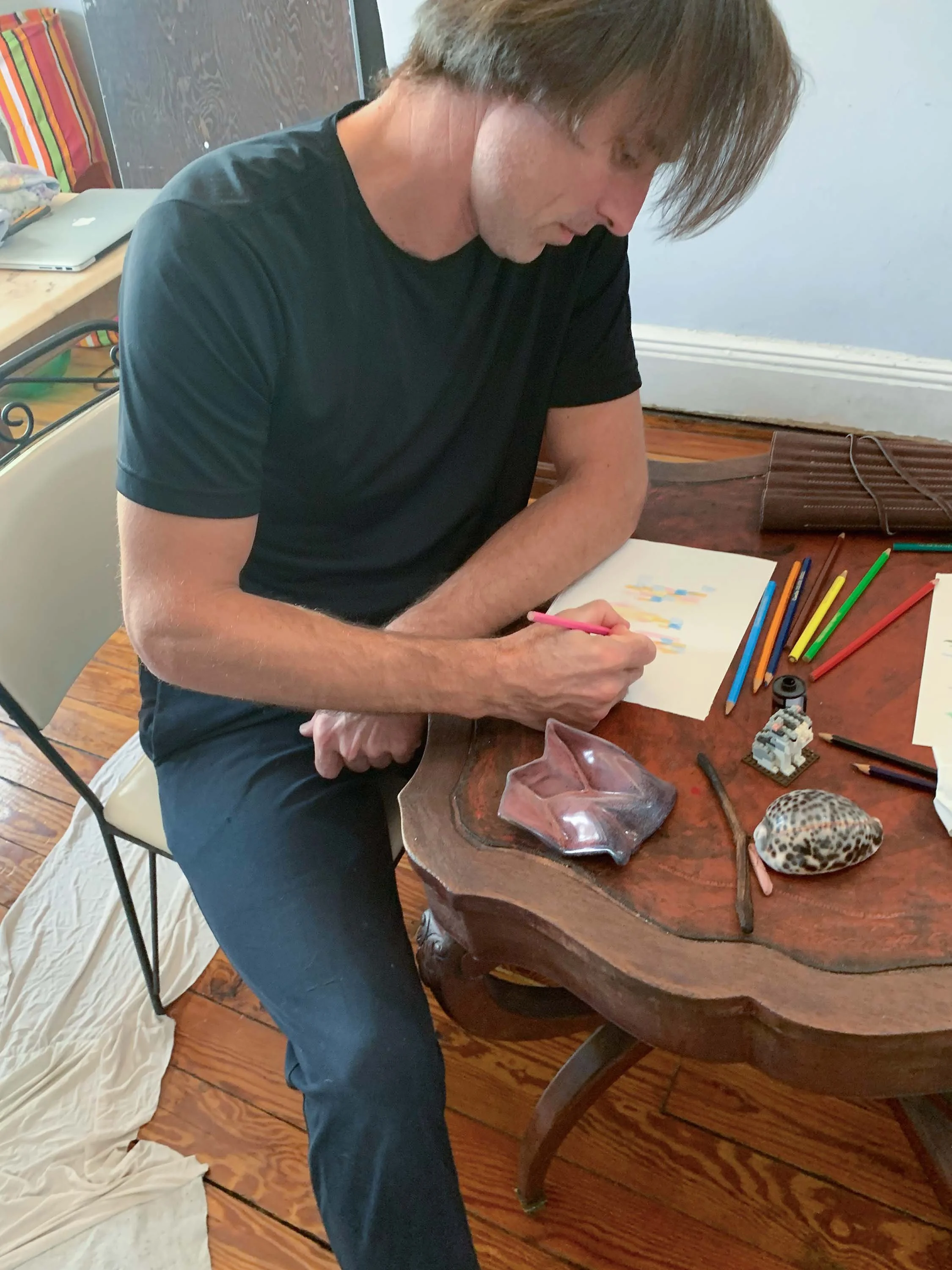
On cats, other cat persons will know, they are quite extraordinary creatures.
TV: This is all super interesting. I always love to think about how an artists personality and personal life is reflected, sometimes unintentionally in their work. Are there any deeper concepts that you think about when creating art?
CN: Art should be concerned with ontology, I believe. My own work is highly formal and recursive, yet I see that as a shell or a surface, or rather a piece of a shell; a shard of a surface. It doesn't so much contain or enclose rather than map something hidden, the way a shadow maps and condenses the form above it onto a ground. It contains something else, a thing that is resistant to language. It could be invisible and immanent, and the artwork is the surface by which it is made manifest in the world.
Ontology is the branch of metaphysics dealing with the nature of “being”, or the set of concepts and categories in a subject area or domain that shows their properties and the relations between them.
The art I make takes part in both of these definitions. A human or a stone can exist in silence, before speaking, before language, although you could make the argument that a human is human because of language. Nevertheless, I seek to make my work in that silence before and beyond language. So it will always be difficult to say exactly what my work is about, but physically standing in front of the work, you should “feel” it, its presence, strongly. As a point of contrast much contemporary sculpture is simply oxymoronic, and only oxymoronic, in a linguistic sense: cold fire; hard soft; etc ad infinitum. The current museum show I'm installing has a great deal of this. It is quite sensual and pleasing to look at, but the thrill passes quickly.
I use the concept of the asymptote in my work, which is taken from calculus. Meaning, for me, I want to slow down the time it takes your eyes to perceive the work, to make the actual air between the viewer and the artwork more liquid; to make the viewing of the artwork an endless approach, where you are getting closer and closer but never actually touching.