
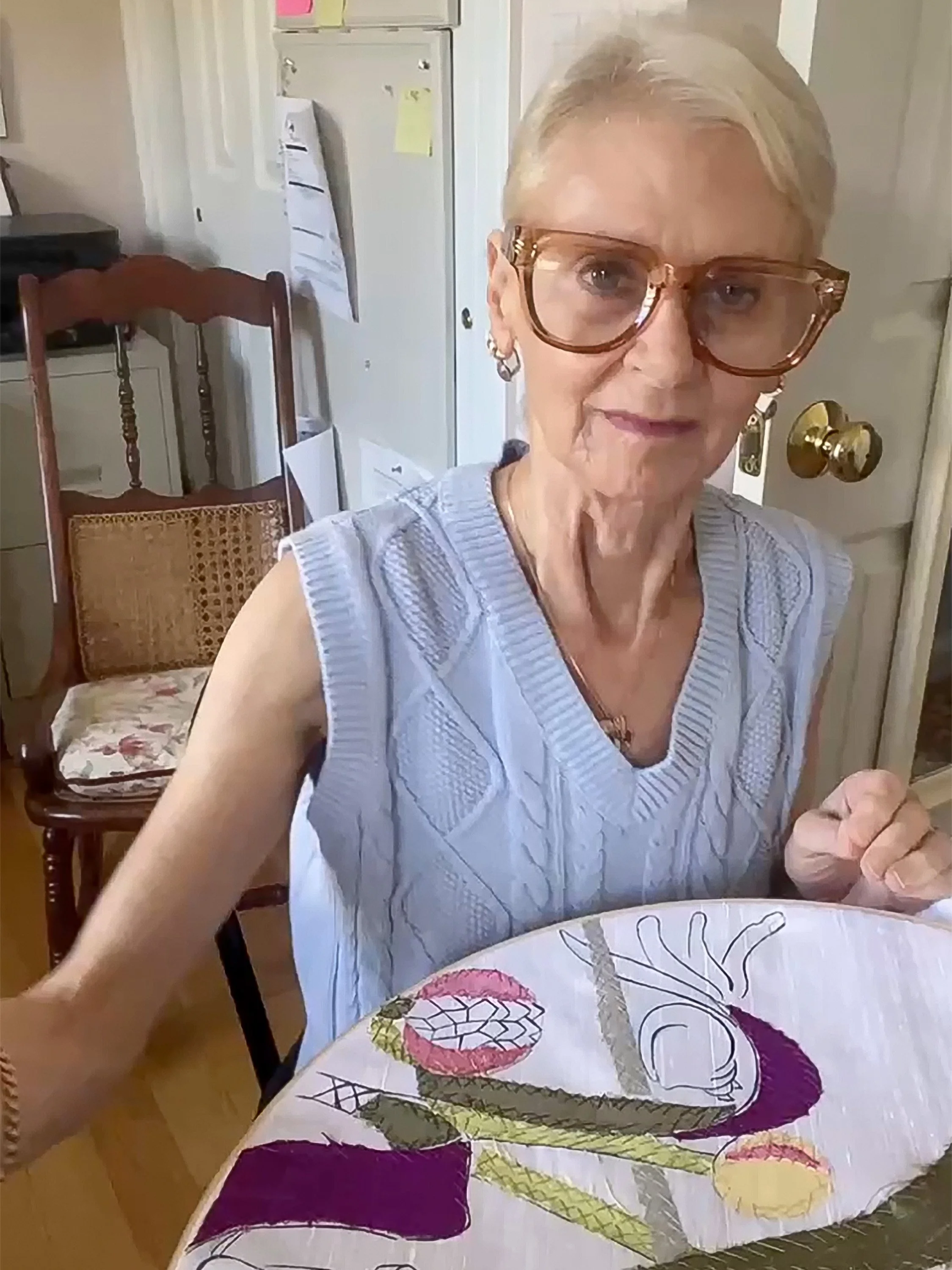
“Being creative takes all my mental energy; executing the product allows my mind to wander. My work is an inner dialogue; sharing my work is an invitation for you to join me in a discussion.”
— Carol Scavotto
TV: Hi Carol, it’s great to catch up with you. I know you keep busy, thanks so much for taking the time to do this interview. I really enjoyed working with you on the show we did in October of 2023, but I’d still love to learn more about your work. Can you tell me, when was it that you first realized you’re an artist and not just someone who makes some art?
CS: I grew up in an artistic family. My grandfather was an architect/ builder. My grandmother was an excellent seamstress. My father was a tool designer back in the day when it was all done by hand. My mother was always decorating our home. My brother has designed and built several boats starting when he was about 12 years old. This being the environment I grew up in, being an artist was the norm, also nothing special.
Visual creating is my first language, the voice I learned to speak through. From a young age, anything I created was viewed through knowledgeable, critical eyes. Suggestions were offered to improve it.
I would sit with my father as he worked out math-based drawings, I shopped with my mother for fabrics, wallpaper, and furniture, learning room design and color coordination. I would sit with my grandmother as she sewed. I would create cardboard paper dolls and make outfits for them from the scraps of fabric. One day, I was creating a pumpkin colored dress for a 2-inch paper doll I had made. My grandmother said, "Oh, well, maybe you will be a fashion designer.” I think that was the first time I remember realizing I was an artist.
TV: That’s fascinating and what a great collection of memories to grow out of creatively. So, early in your life, besides family, did you have any artistic influences or artists you remember admiring?
CS: We always had the Saturday Evening Post in our home. Norman Rockwell is my strongest influence. I fell in love with all his characters; they became like family. This was before understanding how talented he was. I reacted to his illustrations the same way I would to someone telling me an emotional story.
Quick Draw McDraw was a comic book character. He was a horse that always carried a pencil/crayon. He would run around his imaginary world, drawing in different narratives. I spent hours in my first studio space drawing him and creating my imaginary scenarios for him.
Let me explain what my first studio space was. You entered our basement from the stairs as you entered our home. There was a negative space under the staircase. My father worked at night on one side of the basement, and he set up my private studio space under the stairs. It was a very special place. Understanding line is the easiest and, therefore, the most fun part of my work. I often find color overwhelming, becoming the more challenging part of my practice. Creating is my safe space. I become disconnected from constraints, and I am free to just be. It is zen-like calm, even if I am working with emotionally charged narratives. Maybe my favorite work of art is Picasso's The Frugal Repast. It sends shivers down my spine.
TV: It’s so interesting to learn where an artist’s early inspiration and artistic insight comes from. It really informs the work you make now. I’m curious, what inspires you now and drives you in your life?
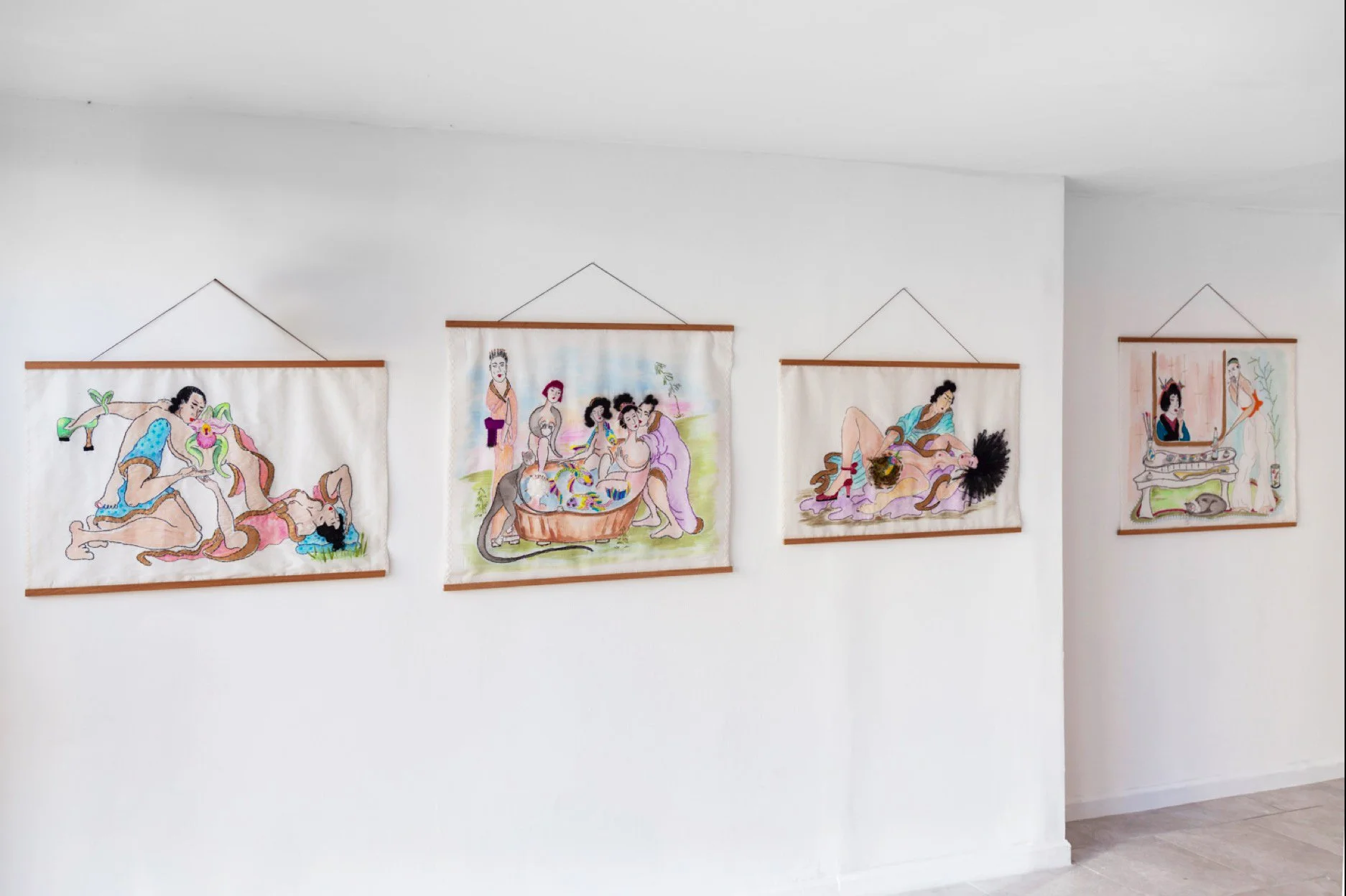
CS: My work is a narrative reacting to a given gestalt. Media and narrative change in line with the topic I am personally trying to resolve. Working with imaginary figures allows me to speak freely. A bit like casting actors in a play, each figure has an emotion and expresses a viewpoint. I learned to express ideas, opinions, and frustrations visually as a young child. I have never lost the need to create a visual persona of myself. My work is an inner dialogue; sharing my work is an invitation for you to join me in a discussion.
TV: I really admire when artists are willing to share their inner thoughts and especially feelings. It takes some gumption to set aside fear and shame and put yourself out there for people to get to know. Even though you are open about your personal self, I wonder, is there anything hidden, like a secret embedded in any of your work?
CS: All my work has a secret I am willing to share. Yet I also like viewers to bring their own personas to the table to interact with my figures. The most painful work I created is called MY TRIP TO THE DOCTOR. In 2009, I was diagnosed with ovarian cancer. During the year of treatment, I drew drawings of what every day felt like. I was fortunate to rely on my visual narrative skills to keep me together. Only one venue has been willing to share the work publicly.
I do not put my personal relationships into my work.
TV: That is an inspiring way of channeling turmoil and challenge into creativity. You put faith into yourself to overcome a literal physical inner struggle. Congratulations on getting through that difficult time and continuing on your artistic journey. So in your current life as an artist, what does a typical day in your studio look like? How often do you work?
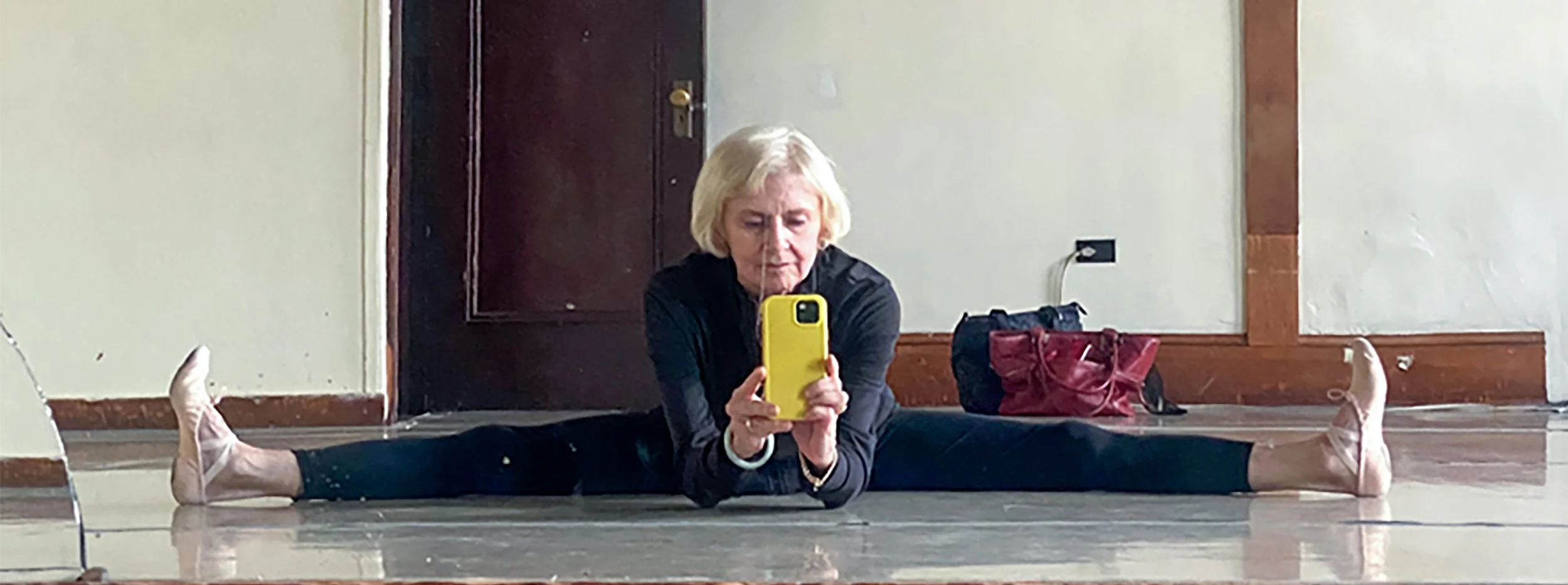
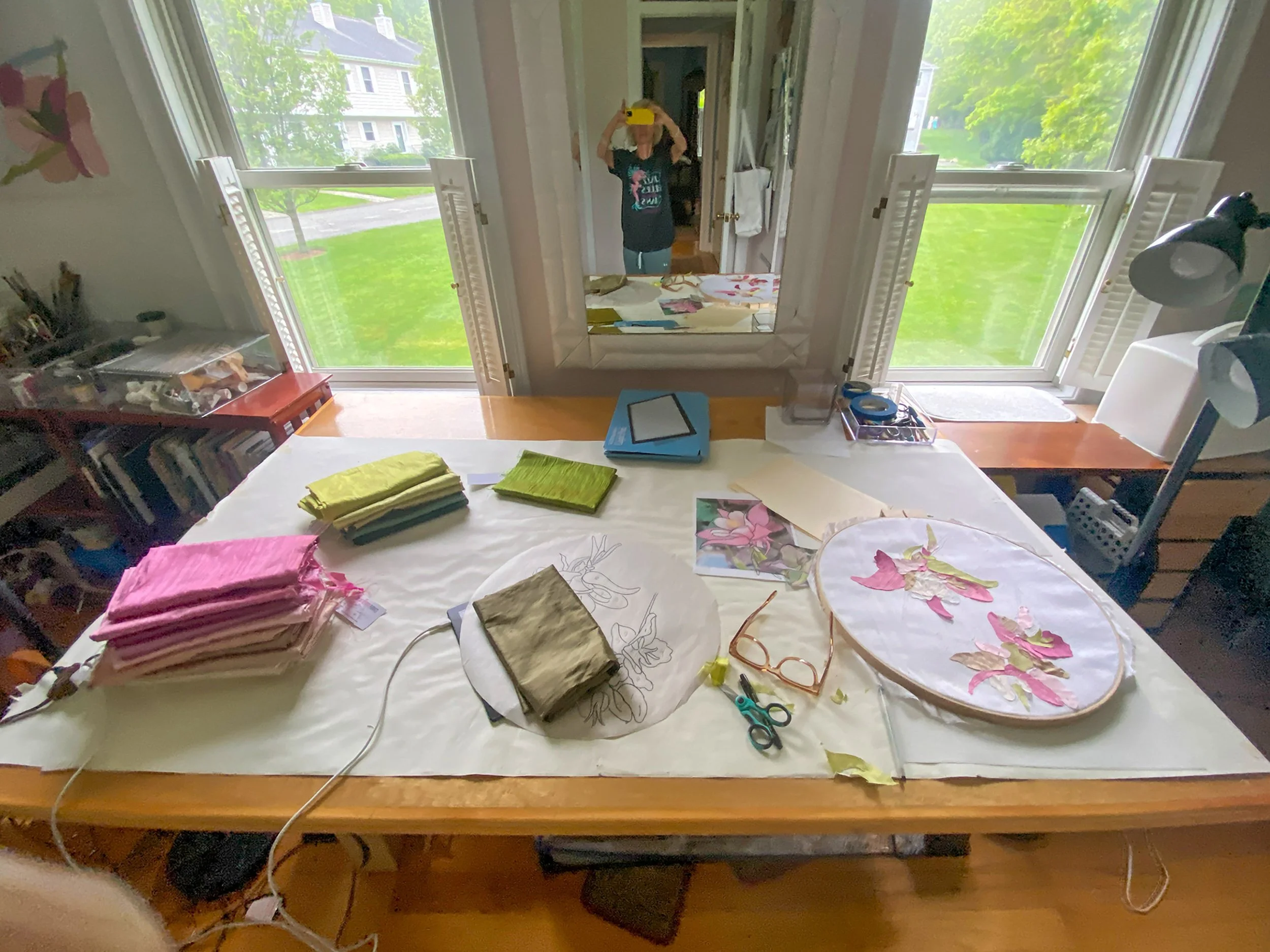
CS: The other day, a friend called me tenacious. It took me a moment to decide if she was insulting me or complimenting me. I decided to consider it a compliment. I work every day as soon as I get up, before the outside world has had a chance to invade my bubble. There are days of creation and days of implementing the craft. This creates a balance for me. Being creative takes all my mental energy; executing the product allows my mind to wander. This allows me to be in the studio every day. The two things that have been constant in my life are art creation and physical activity. Taking and teaching ballet daily is my creative physical outlet.
New pieces for me usually begin in a dream form. I often wake up in the middle of the night and sketch the dream. I then revisit it in the morning to solidify the thought. While working, I am involved in an intense conversation with the piece. I prefer to keep the intensity to one piece of work at a time. I have several odds-and-ends mini-series sitting on the back shelf. When I find myself in a creative lull, I complete one of them.
My studio space is in my home. This has both advantages and disadvantages. Advantages: my work is intimate, and I work in my personal intimate space. The disadvantage is the space is small, making studio visits a challenge.
TV: This is all so insightful, I can think of several more questions I’d like to ask, but I wonder if there’s anything you’d like to share that we haven’t touched on yet.
CS: One question I am seldom asked is Do I like to teach art? My answer is no. I find it exhausting to try to teach something so personal and close to my heart. On the other hand, I do enjoy teaching ballet and physicality.
TV: It’s actually refreshing to hear someone be very straightforward about what they don’t like to do, especially with something like teaching, where some people feel like it’s an obligation, but really if there’s no interest, there’s probably no benefit for either party. Carol, I’m glad to learn even more about you. Thanks so much for all your candor and insight into your work.
Carol Scavotto lives and works outside Providence, Rhode Island