
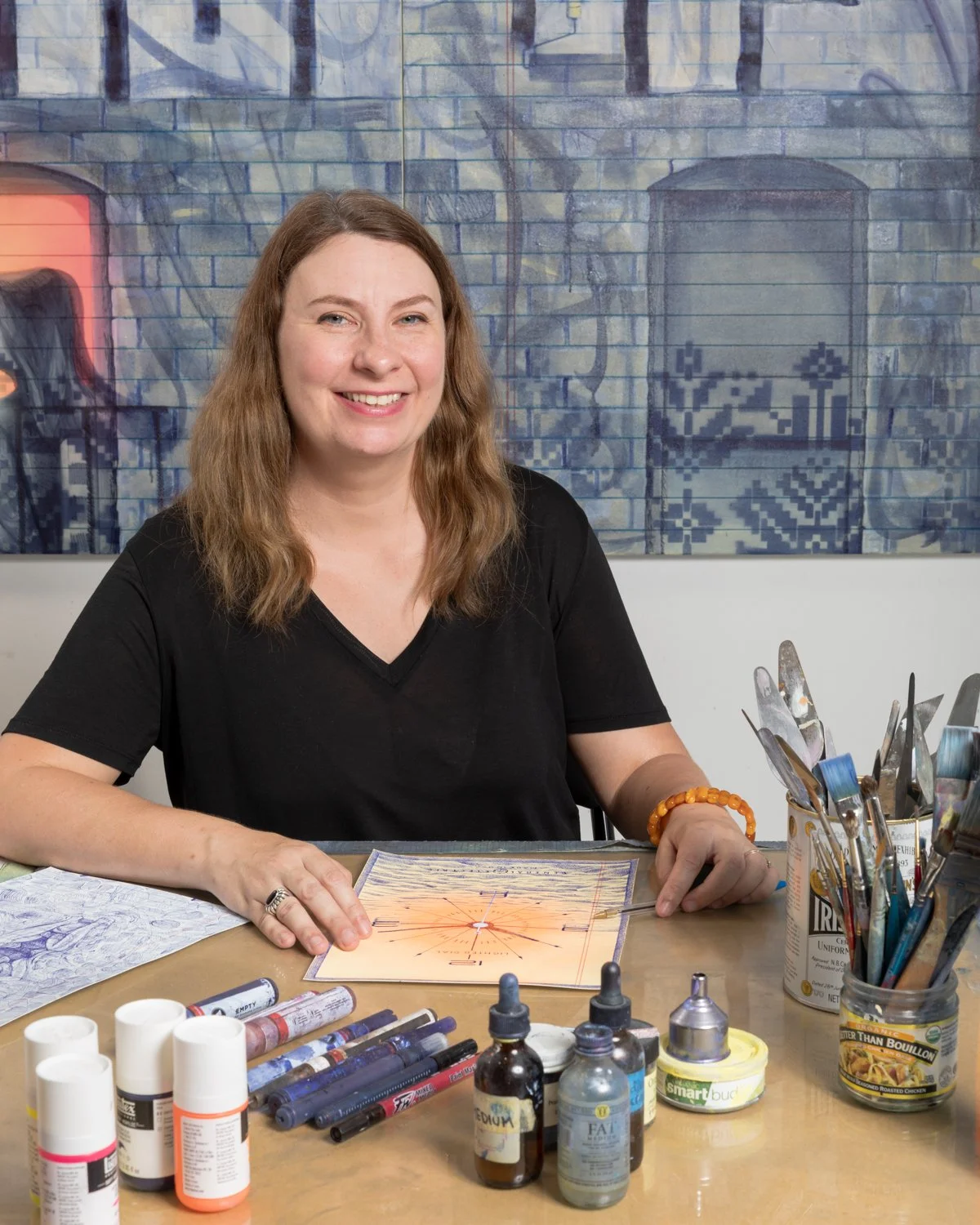
“I believe artists have more of a responsibility to not only navigate their way through this fractured landscape but to show others the way forward.”
— Daina Higgins
TV: Hi Daina, I’m glad to have you doing this interview. I first became aware of your work through the gallery’s connection with NARS and the Brooklyn art scene in general, but was really excited to learn that we’re both from Columbus, Ohio, and both had connections to Fort Hayes- you as a student and me from doing recording sessions there with my band-mates who were also students there. I was fascinated to learn about your story when we met, especially your interest in your own history. To start off, can you describe what it feel like for you when you make art?
DH: Making art can be a frustrating stutter at first, starting and stopping and backtracking. Trying and experimenting with different approaches. Gazing at what you did for several minutes, wondering where to go next. Sometimes you have to set something aside and come back to it later. It is important to press on. If you do, you can reach the flow state. This is where your inhibition and self-consciousness fall away and you become completely absorbed in your task. You are not bored but not overly challenged. Hours pass and you lose track of time. It's like taking a mini vacation from life, or maybe how a bird feels when it is gliding on an updraft. If artists could bottle and sell it they would all be rich.
TV: I agree, Artist Elixir would be a huge seller. It initially sounds hilarious, but in a way, I think that is the exhilaration that audiences seek from art. Part fantasy, part experience. Artists have always been doing something that non-artist are curious about, dubious of, or incredulous to, and maybe that’s why art perseveres. Do you see artists as tasked with some sort of responsibility to human history?
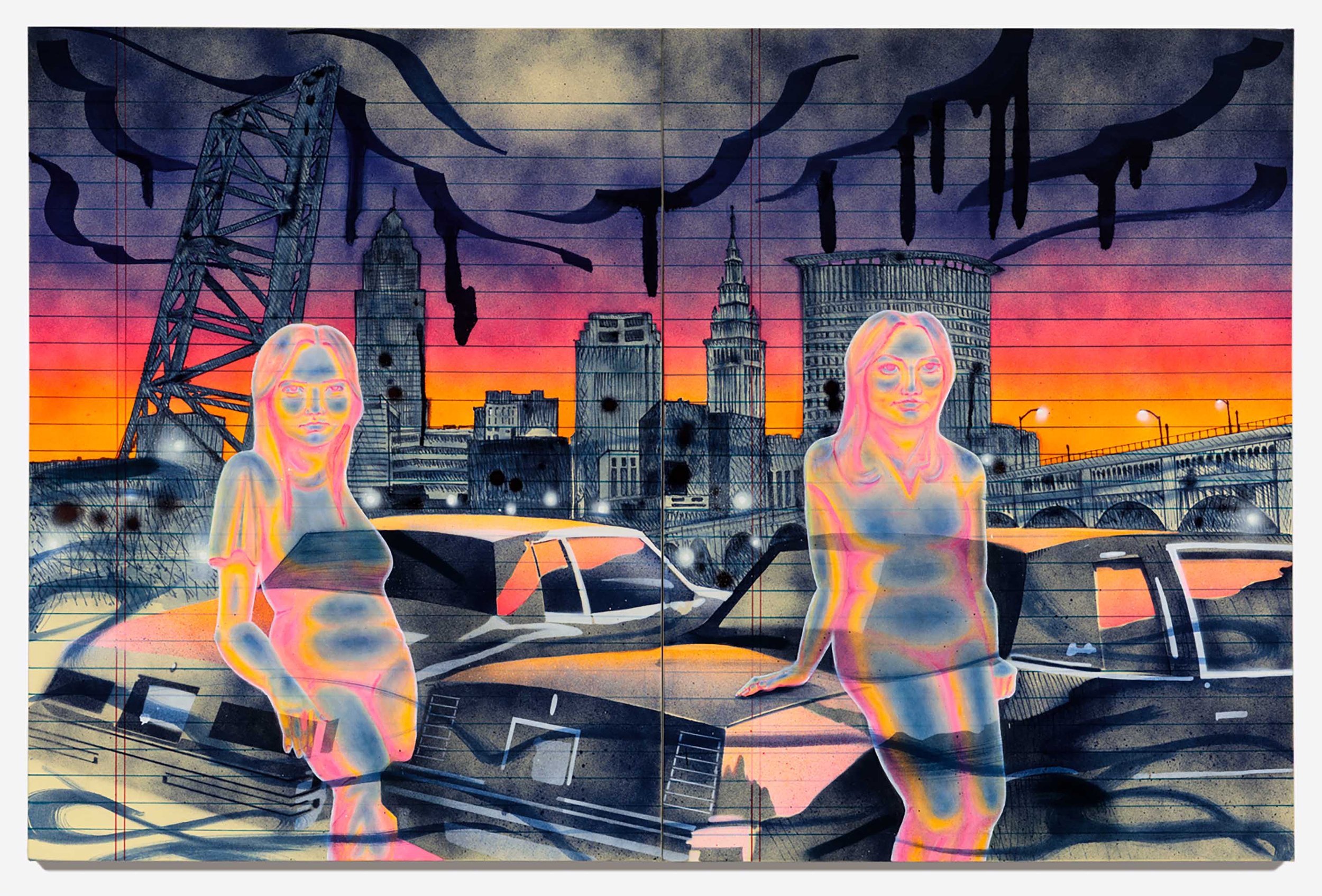
DG: I think, within certain institutional structures of the art world, that the influence of history (specifically art history) can not only be overstated, but that often the relationship of the historical referent to the contemporary work is tenuous at best, and a marketing tactic at worst. That said, artists can find sympathetic periods or figures in history that the current moment lacks. And if your work deals with sociopolitical themes, as mine does, it is important to know the history of social and cultural movements. We are in an unprecedented moment with the advent of artificial intelligence and machine learning, along with end stage capitalism. It has the potential to disrupt the way we organize our entire civilization. With that in mind, I feel that artists have less of a 'responsibility to history' than they ever have. I believe artists have more of a responsibility to not only navigate their way through this fractured landscape but to show others the way forward.
TV: It seems that it is often artists of one kind or another who predict the future, or define the present, both of which eventually become history. It’s interesting to think about how that was done in the past and what affect it made on the way we look at art now. Tastes change, people change, the perception of success and beauty changes. Does what you perceive as beautiful play a role in your work?
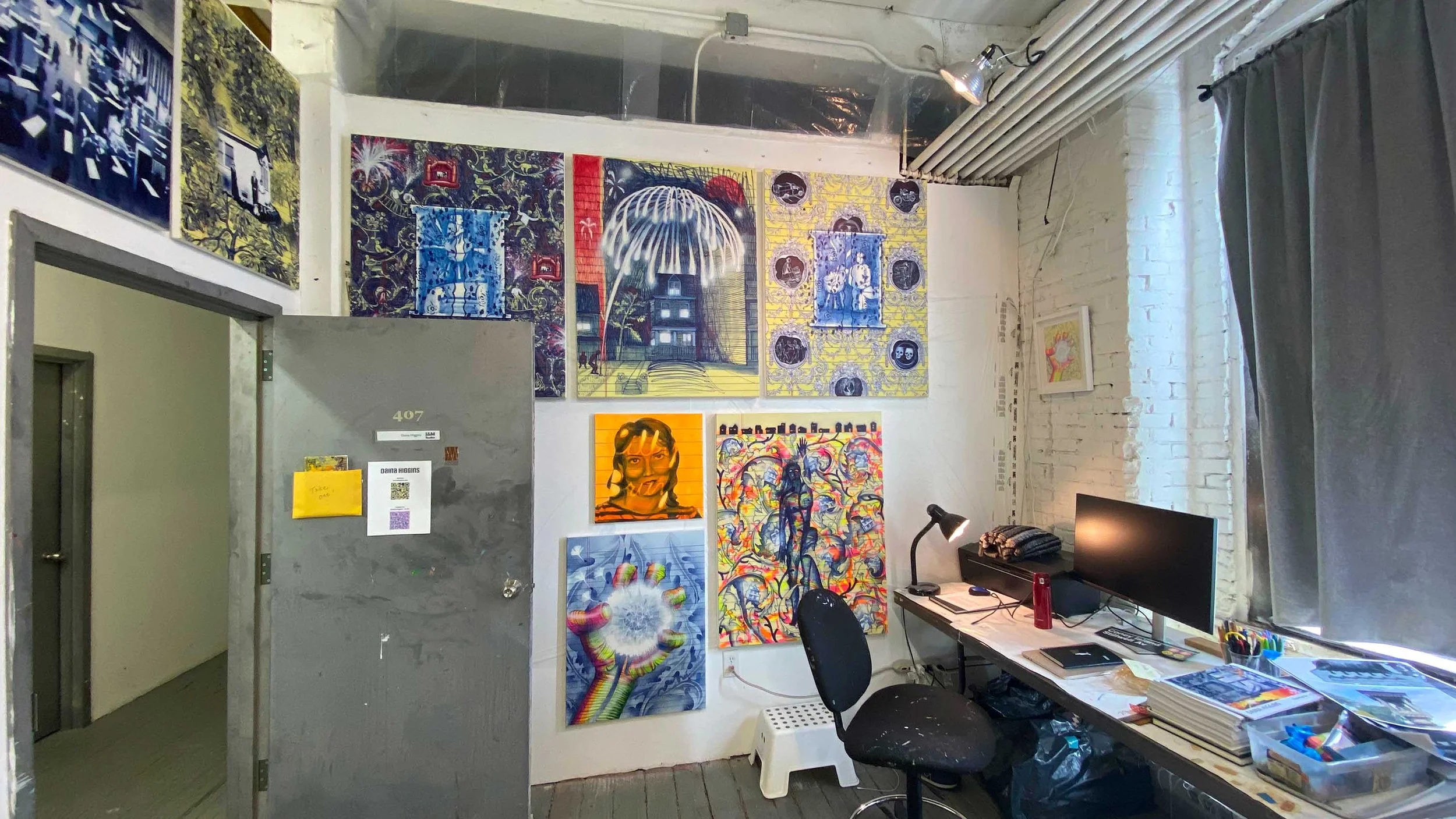
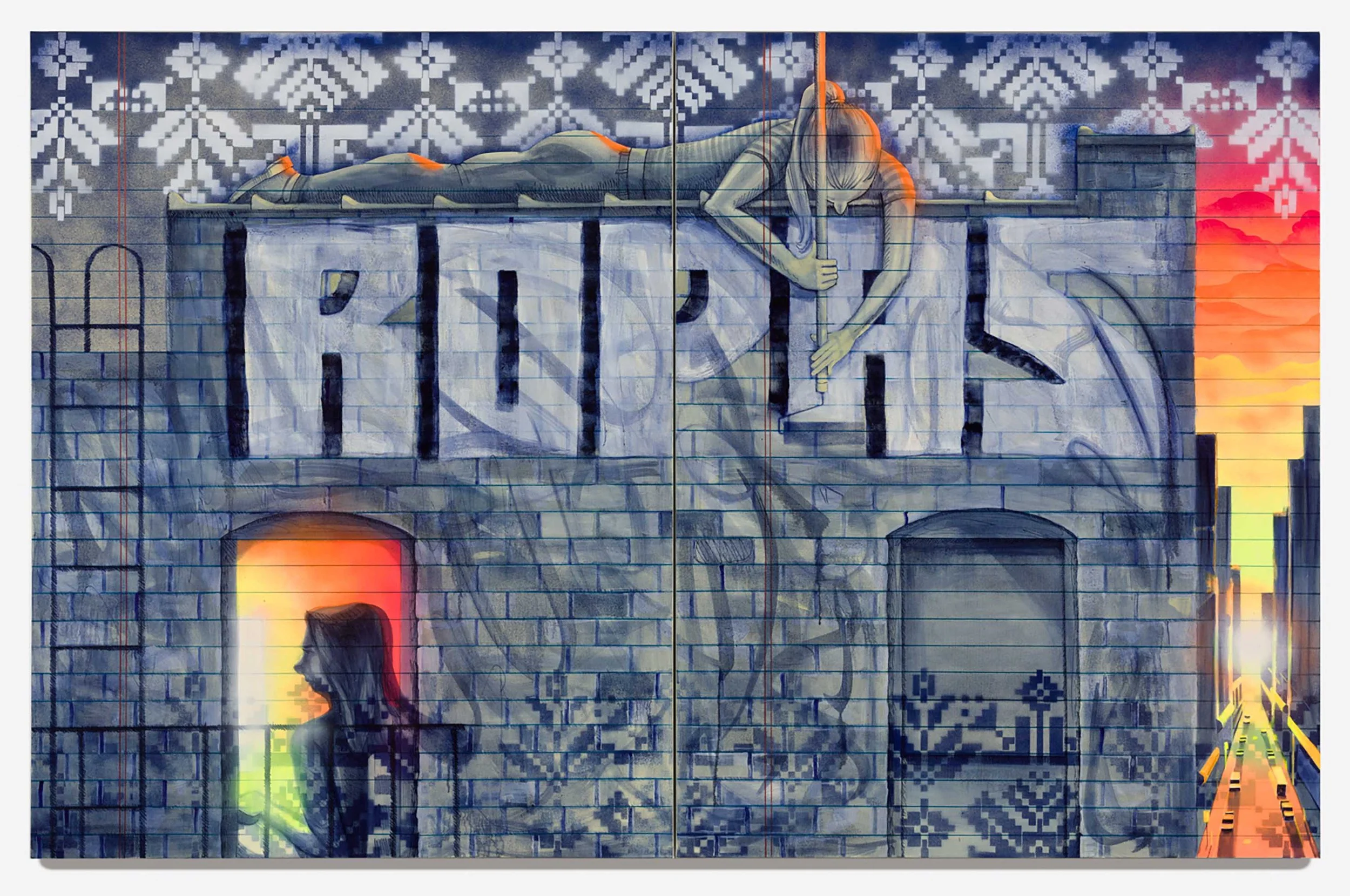
DG: Beauty itself is subjective, but the concept of beauty in art and culture has always been a focus of mine. I got my start as a graffiti artist, I wouldn't even call it “artist”, just a teenage graffiti tagger. I've always seen graffiti tags as beautiful, but most people think they are ugly and destructive because the dominant culture has reinforced that belief. I studied art and design in the 1990s, a time that was dominated by Western cultural standards of beauty. Then I worked in a modernist architectural office, and the lack of color and decoration gave me a lot to consider when it came to surface design and why it is rejected by Western patriarchal societies. In my current work, there is a limited palette but endless ways of marking and building up the surface. I like to make cheeky references to Western beauty standards I learned in school, such as sunsets, flowers, and the ocean, but these are balanced by references to the subcultures and Eastern European culture I was raised in.
TV: That’s definitely a subject at hand, and one with myriad points of view depending on personal experience, but seems to establish an equilibrium somewhere. Has art ever helped you process something personal?
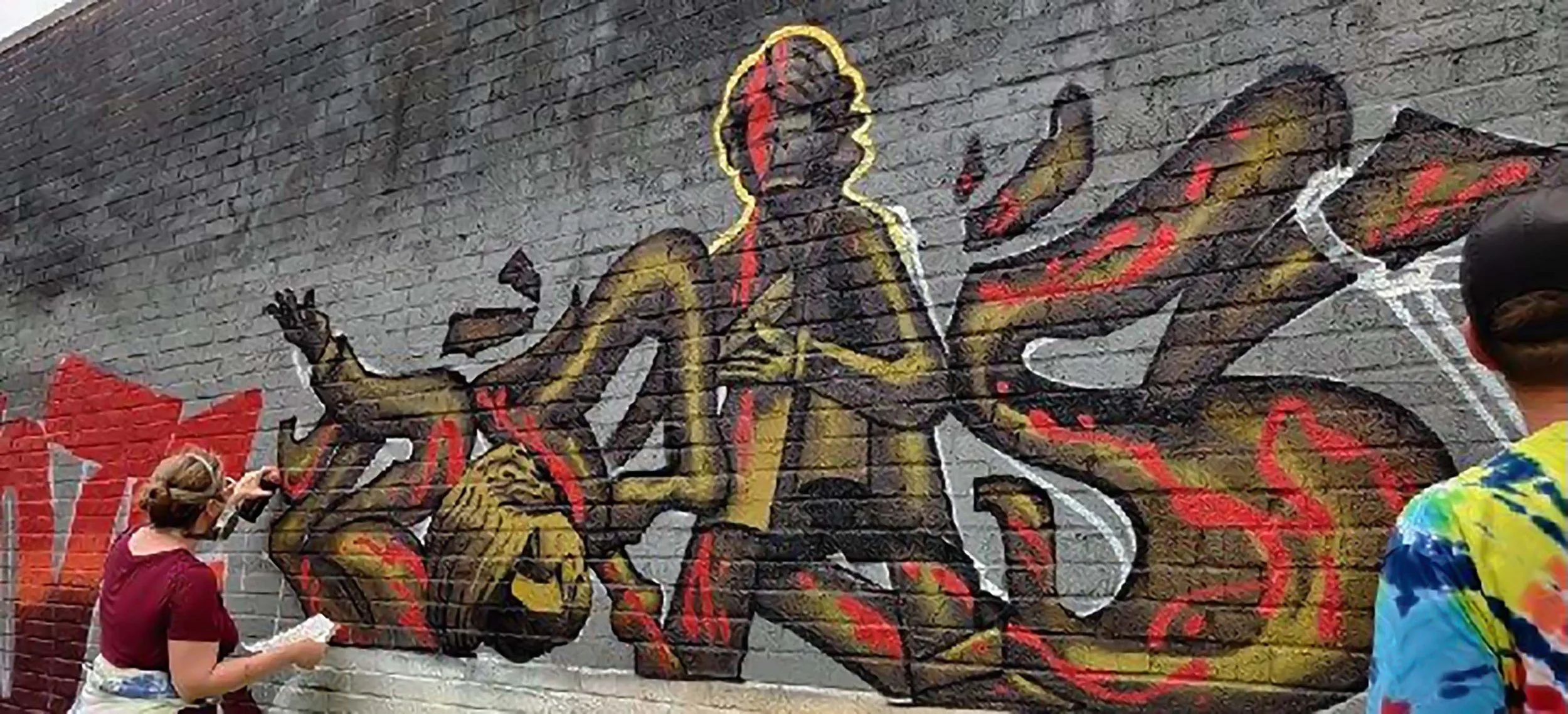
DH: All the time! I'm currently exploring themes of generational trauma, displacement, and loss. For me personally, it was having to give up my beloved home because my neighbors would not leave me and my spouse alone. I made some large multi-panel narrative paintings out of the experience called "American Neighbors". My story is a microcosm of the divided country as a whole. Looking back, I see a lot of similarities of this time to my grandparent's experience fleeing the violence of WWII. They immigrated to the United States and lived below the poverty line in Cleveland, Ohio. That had an effect on my entire family growing up. My parents- my mother especially- encouraged me to explore art. I think she knew it would help me process the life I had been born into. Thinking back on my family trauma has helped me understand myself a bit better. For instance, a female cousin's untimely death was a catalyst for me becoming a graffiti artist at age thirteen. I had a lot of rage that could have destroyed me, but I channeled it into creative expression. And I found out that I am drawn to people who choose a different path in life, and they are usually artists.
TV: Creating something can be very therapeutic. Sometimes there’s an illusion that the life of an artist is always tranquil and copasetic, but I know there’s a lot more to it. For you, is there a part that’s less glamorous?
DH: Artists wear many hats, but I'd have to say schlepping art all over the place. No disrespect to art handlers, because it's a valued profession, but I'm not one and I loathe having to move my art around! But usually it's a necessity.
TV: I know artists who have changed their entire practice solely because of this, like from sculpture to watercolor, but hopefully it’s all worth it. There’s a lot about the art world that people don’t know goes on behind the scenes. Any ideas for what people can do to support artists and cultural spaces?
DH: Great question! Art is for everyone. Visit your local exhibitions, open studio events, and artist talks and performances, they are usually FREE! Ask questions, get to know the artists and the exhibition coordinators. Amplify their voices on your platforms. Check in with them once in awhile. A kind of support note goes a long way. They are usually funding this on their own so go and support them, it's what makes a community.