
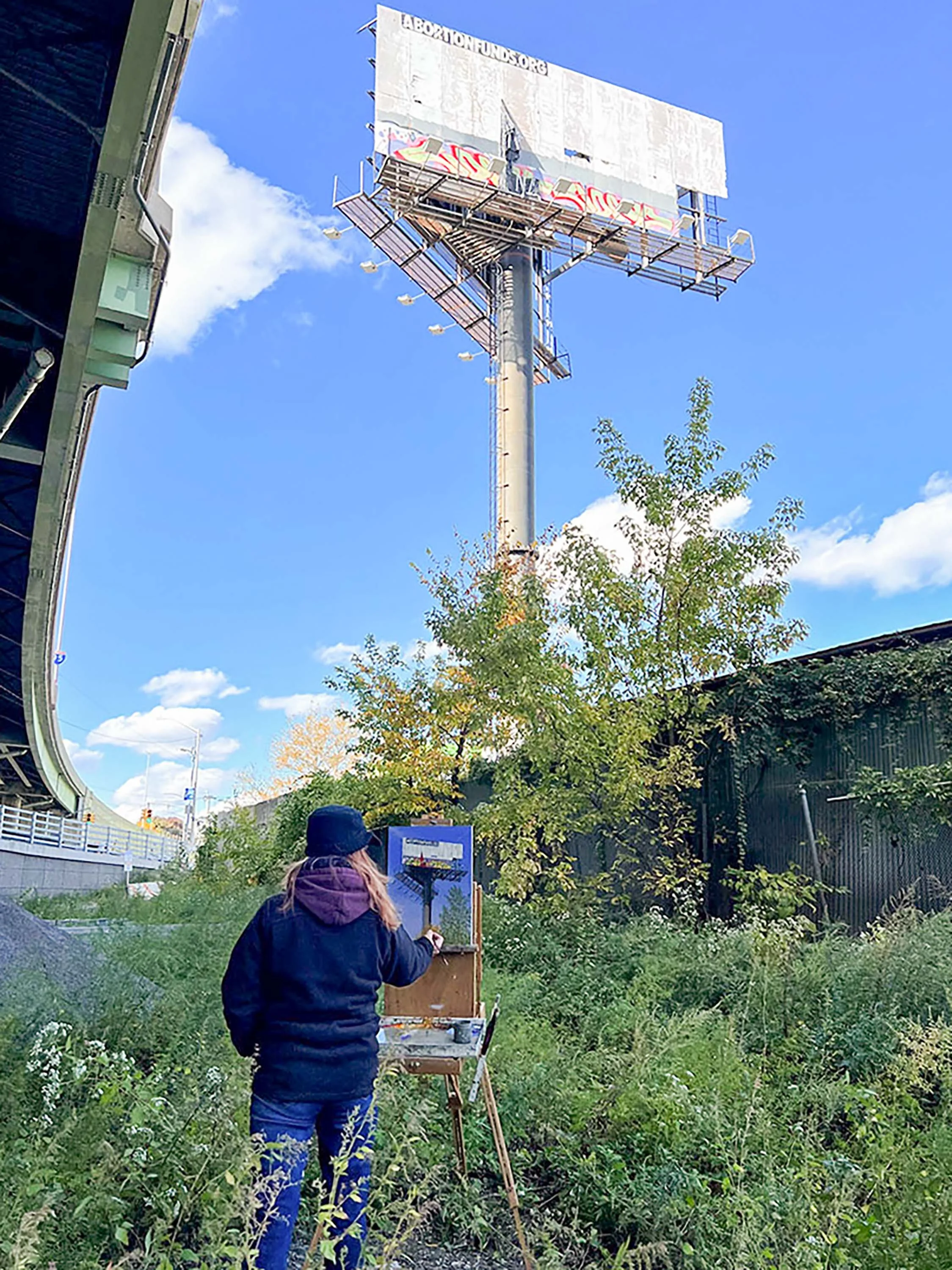
Photo by Andre Smits
When you’re an artist, there’s no retiring. I expect to keep painting until I can’t hold a brush anymore, and that is a wonderful thing.
— Valeri Larko
TV: Hi Valeri, I’ve been following your work for quite some time. We had the chance to work together last year and I really loved that show, I think it came together so beautifully. I know you always keep busy, and have had an incredible last few months with several museum acquisitions, the film that came out, and are constantly working, it’s all very impressive. So when did you first consider yourself an artist, not just someone who paints?
VL: That’s hard to say exactly, because it happened so long ago. I wasn’t sure what I wanted to study when planning to go to college after high school, so I went to community college to figure that out. I always enjoyed art, and when I took an oil painting class at Morris County Community College in New Jersey when I was 19, it was love at first brush stroke. The following year, I enrolled in the cheapest art school I could find, which was DuCret School of the Arts in Plainfield, NJ. It was a three-year art certificate program and I enrolled in as a painting major. At that point, I knew I had found my calling in life and I never looked back. Originally, I thought I would be a figurative painter, so after DuCret, I took figure painting classes at the Art Students League and the National Academy of Design, both in Manhattan. Eventually it was time to wrap up studying and go out into the real world as an artist.
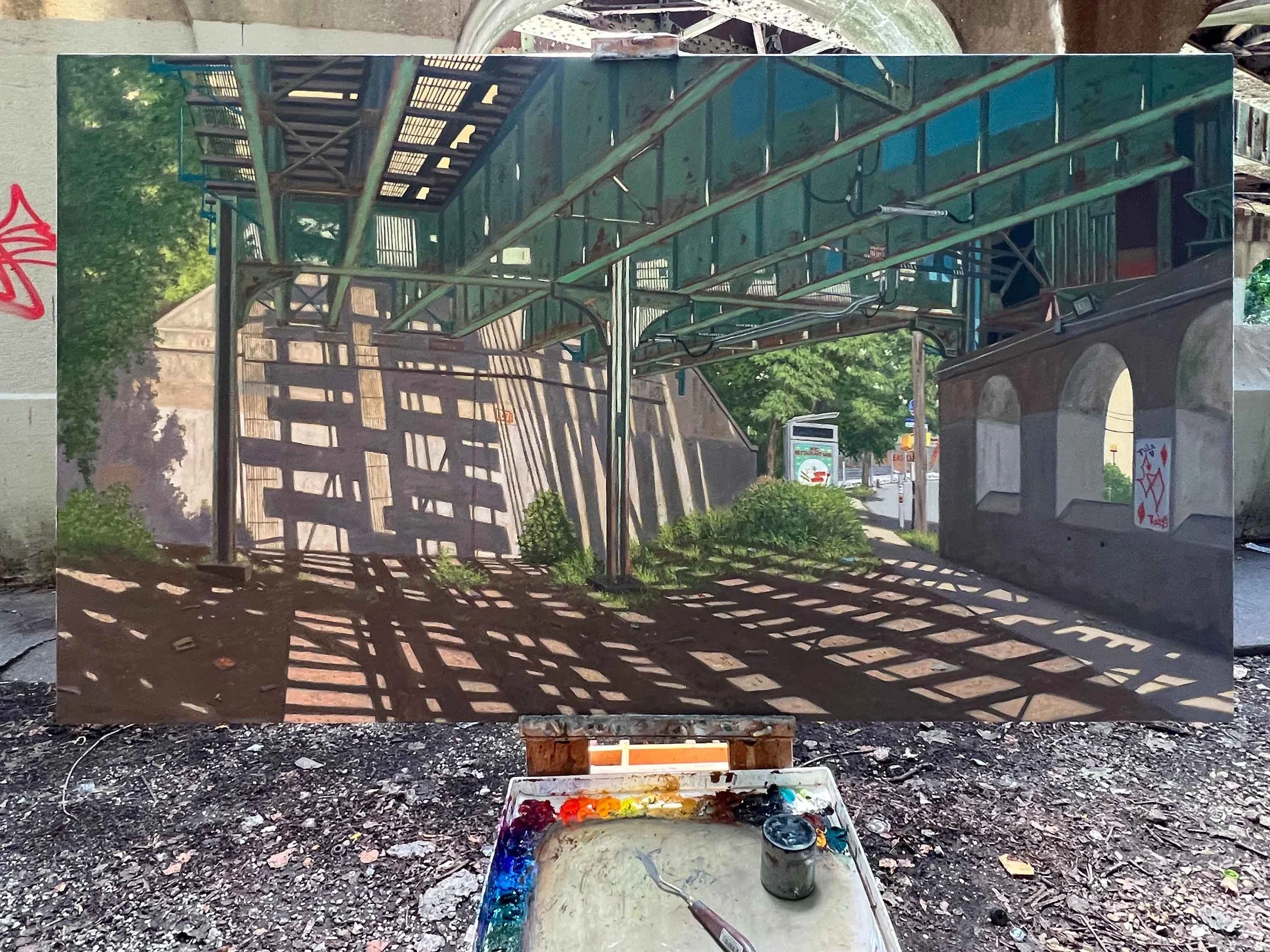
The one constant in my studies, was that I preferred painting from life rather than from photos. Although I will use a photo reference when I need to, there’s something about direct observation that always appealed to me. Right after Art School, I moved to Jersey City, NJ, which is a very densely populated city surrounded by industrial parks and I thought what am I going to paint now? I couldn’t afford to hire models to pose and after a while I got bored with painting self-portraits and interiors of my apartment. Since I had enjoyed painting landscapes on location in the summers when classes weren’t in session, I started looking around at my urban neighborhood and decided to try painting in the local park. As the saying goes, the rest is history. That was in the late eighties and I’m still painting urban landscapes on location. Those early urban landscapes are in private collections.
TV: That is a true origin story. I really admire that you found your own way, discovered a process that you love and that suits you, and just got deeper and deeper into your life as an artist. Were you interested in art before you started painting? What was the first museum or gallery that made an impression on you?
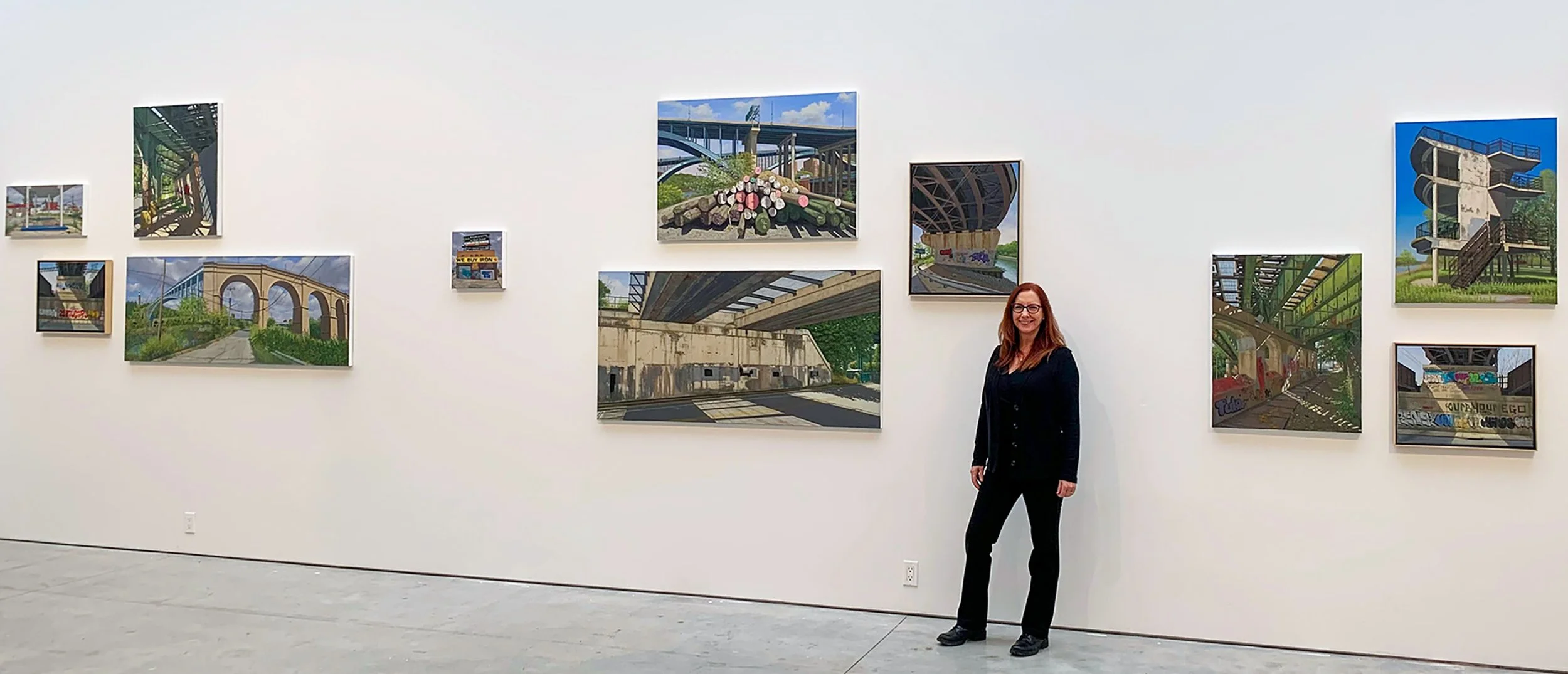
VL: When I was 17, I had a wildly inappropriate older boyfriend. He was a hot mess and I didn’t know any better, however he took me to The Metropolitan Museum of Art in Manhattan and that was a life changing moment. Looking at art in a major museum, so much of it and such a wide array was something I had never experienced before. I’d been taking art classes in high school and that trip made me see a wider world of art and art-making. That museum visit, influenced my decision to consider art as a major when I went to college.
TV: I love The Met, it truly has something for everyone. I remember I took my aunt there once and we looked at everything in the museum for hours, and when I asked her what her favorite part was, she said the shaker furniture, which is as minimalist as a thing can get. That’s when I realized the true breadth and wonder of that place and of art and design in every person’s life. So what actually inspires you and drives you in your life, and how did that develop?
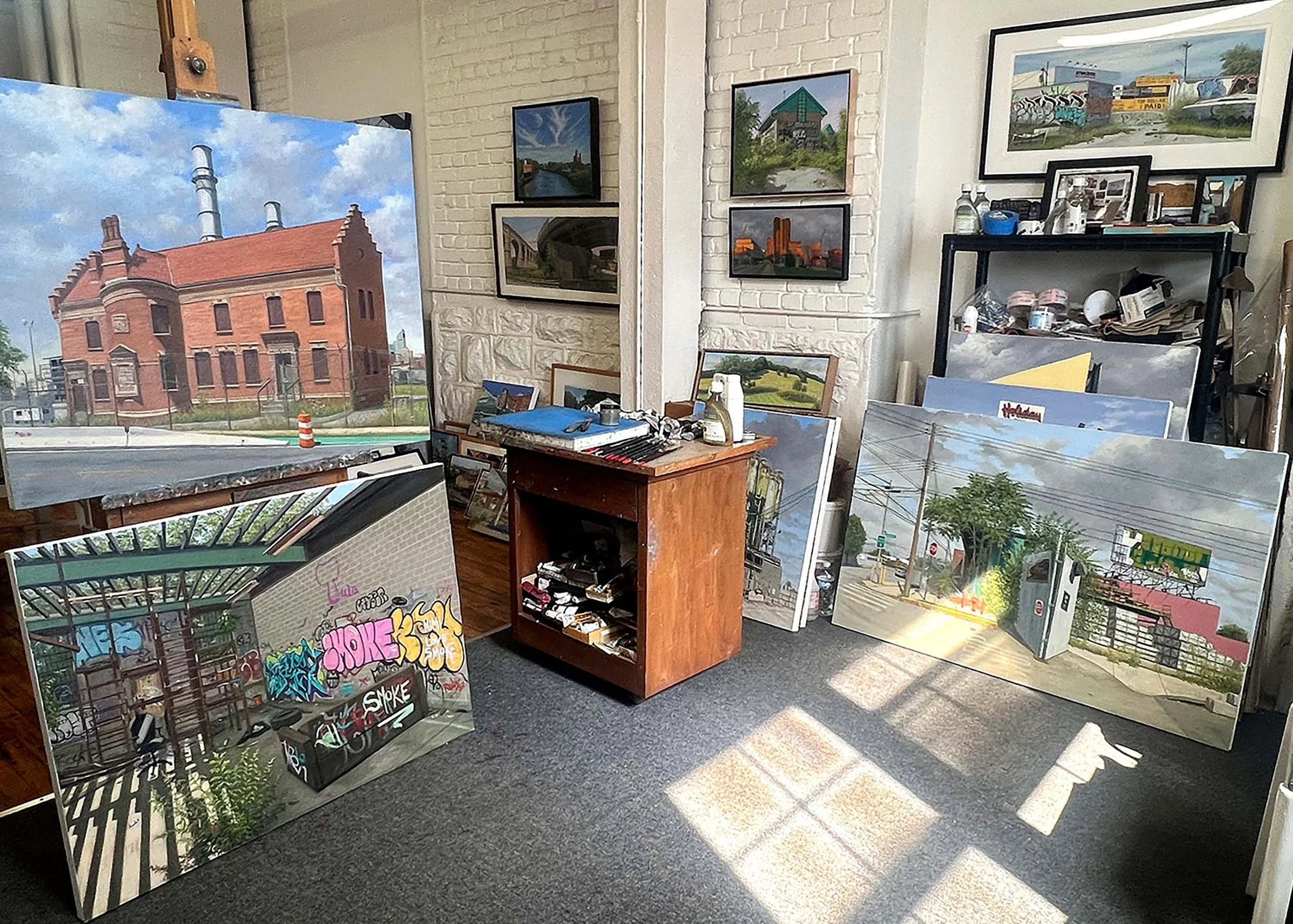
VL: The thing that drives me, is my work ethic instilled in me by my mother. It wasn’t necessarily a good thing at the time. She was mentally ill and expected me to take care of her. However, it did turn me into a worker bee, and I’m happy that is now part of who I am. Art was a great escape when I was a kid. Like most kids I loved drawing and making things and I’m grateful that I never lost that sense of wonder. That sense continues to inspire me to make art as often as possible. Art is my happy place. Another reason I paint on location rather than from photos, is because I love the interactions that I have with the people who I meet on location. Talking to people who live and work in these areas has given me a deeper understanding of these sites and also the world around me. I consider myself a visual story teller, and being on location for an extended period of time allows me to form a deeper connection to the site and the people I meet along the way. As the saying goes, “it’s not the place but the people”, and for me it’s both.
TV: You are definitely a people person, you seem naturally outgoing and gregarious, which some artists struggle with. Do you also have an introverted side? Like, is there an internal part of your art that is different from the affable personality you have socially? Do you ever use art to deal with any personal issues?
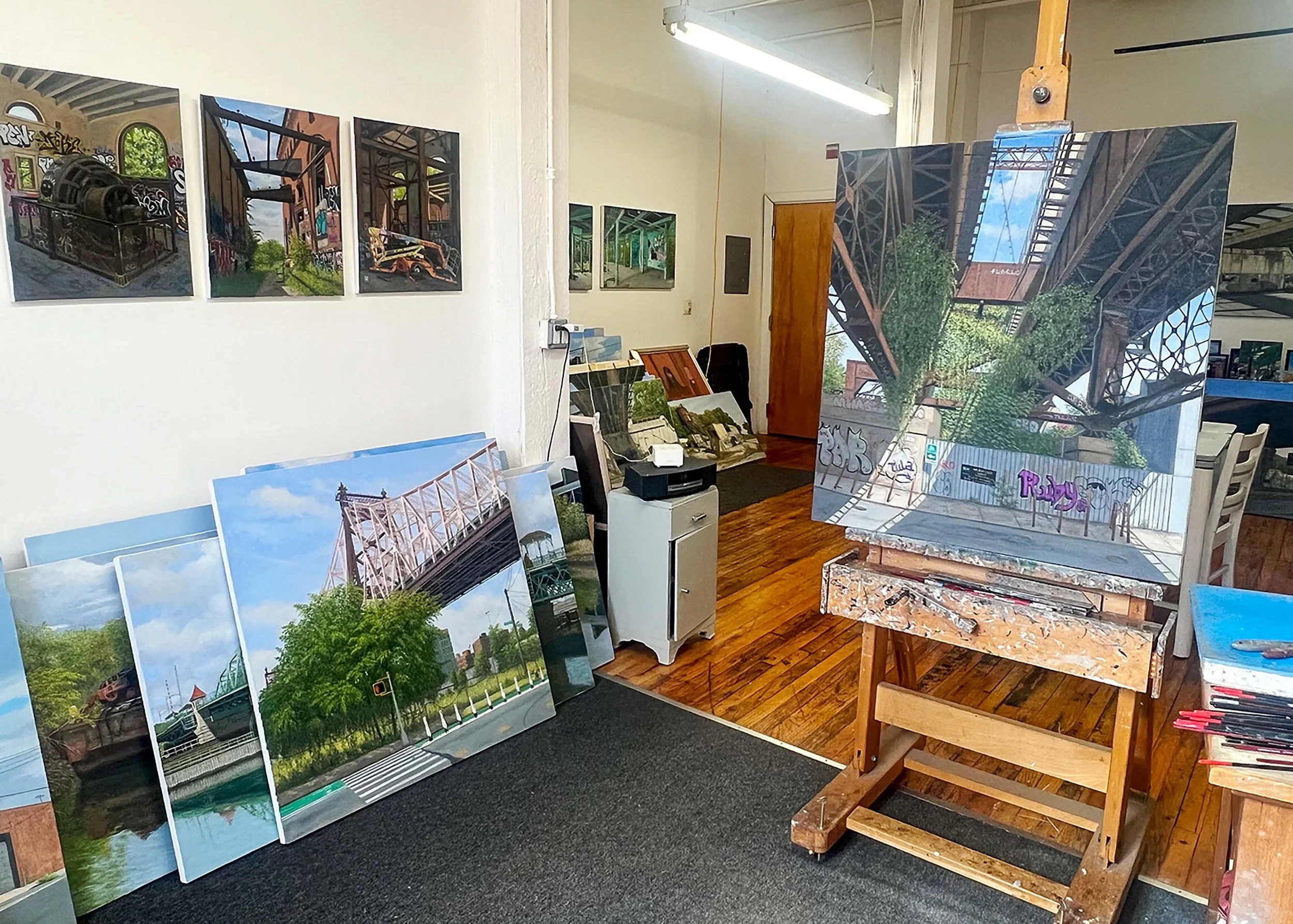
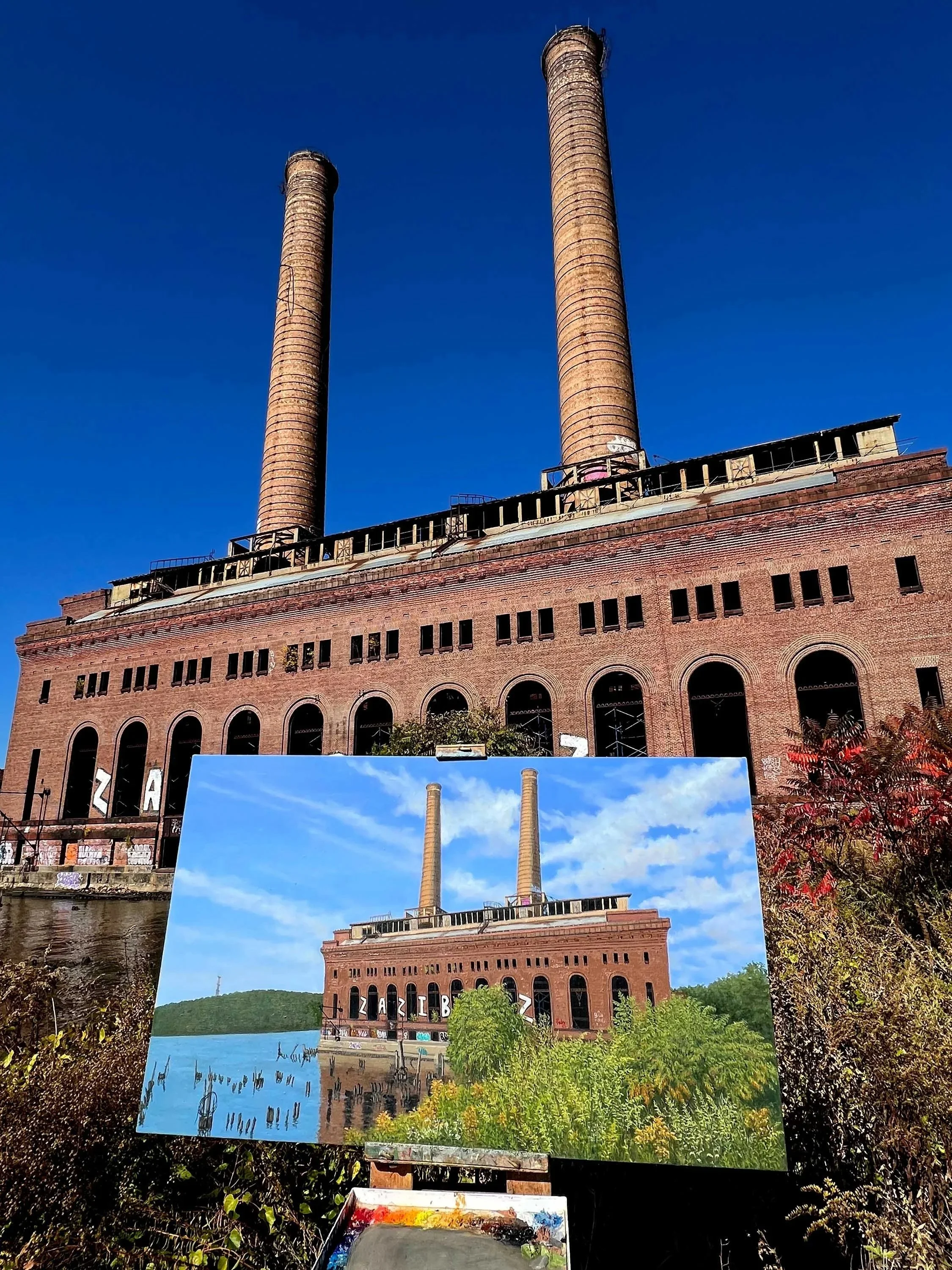
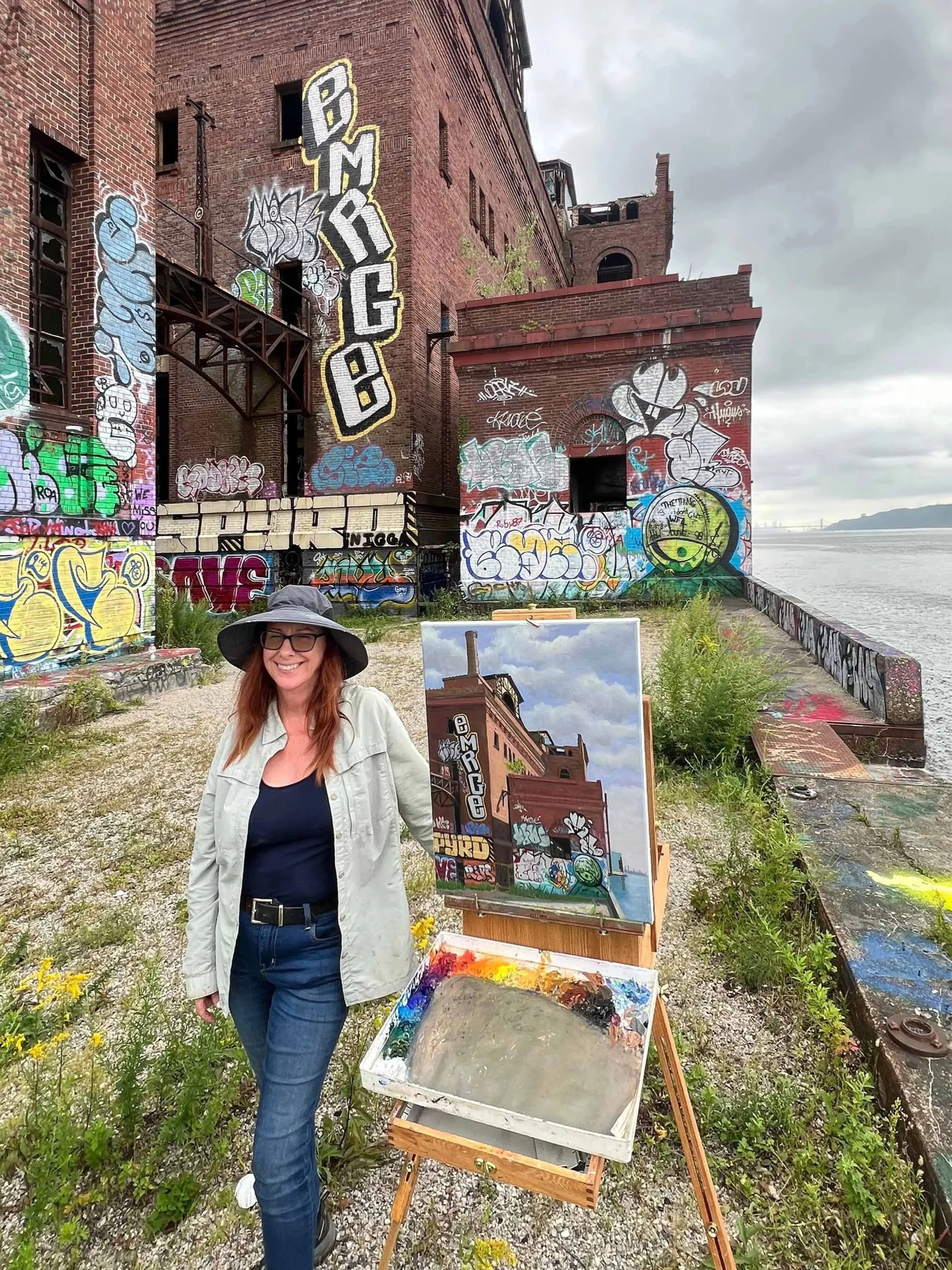
VL: Art definitely helped me through a challenging childhood, and more recently it helped me deal with the death of my only sibling, my older brother Kenny. He was seven years older than me and when we were kids, he always looked out for me. He loved me unconditionally and always had my back when we were younger. I returned the favor as we got older and he struggled with his mental health. He was a very good person no matter what he was dealing with. I found out he had passed away on December 20th 2023. He was living in Oklahoma. There wasn’t much I could do at that time, so on Christmas morning I woke up and told my husband that I needed to go to the abandoned Power Plant in Yonkers and paint a memorial wall for Kenny. A graffiti writer friend had given me a bunch of spray cans of paint, and I never did anything with them, but I kept them just in case. That “just-in-case” turned into my creating a memorial wall for my brother Kenny. I’m not saying it’s a good piece of art, far from it, but it helped me process the grief I was feeling. The reason I picked this spot was two-fold: I was already working on a series of paintings of the site, so I knew how to access it, plus the place is covered head to toe in graffiti. The summer before my brother died, I met a graffiti writer who was painting a memorial wall for his recently deceased wife. We talked and he told me about her. It was a moving experience and her memorial is in one of my power plant paintings. That encounter stayed with me and that’s why I decided that doing a wall for Kenny was the right thing to do.
TV: Wow, that is truly profound and moving. It’s amazing that you were able to take action and do something positive to confront such a difficult situation. Do you always set out with a plan like that when you go out to paint?
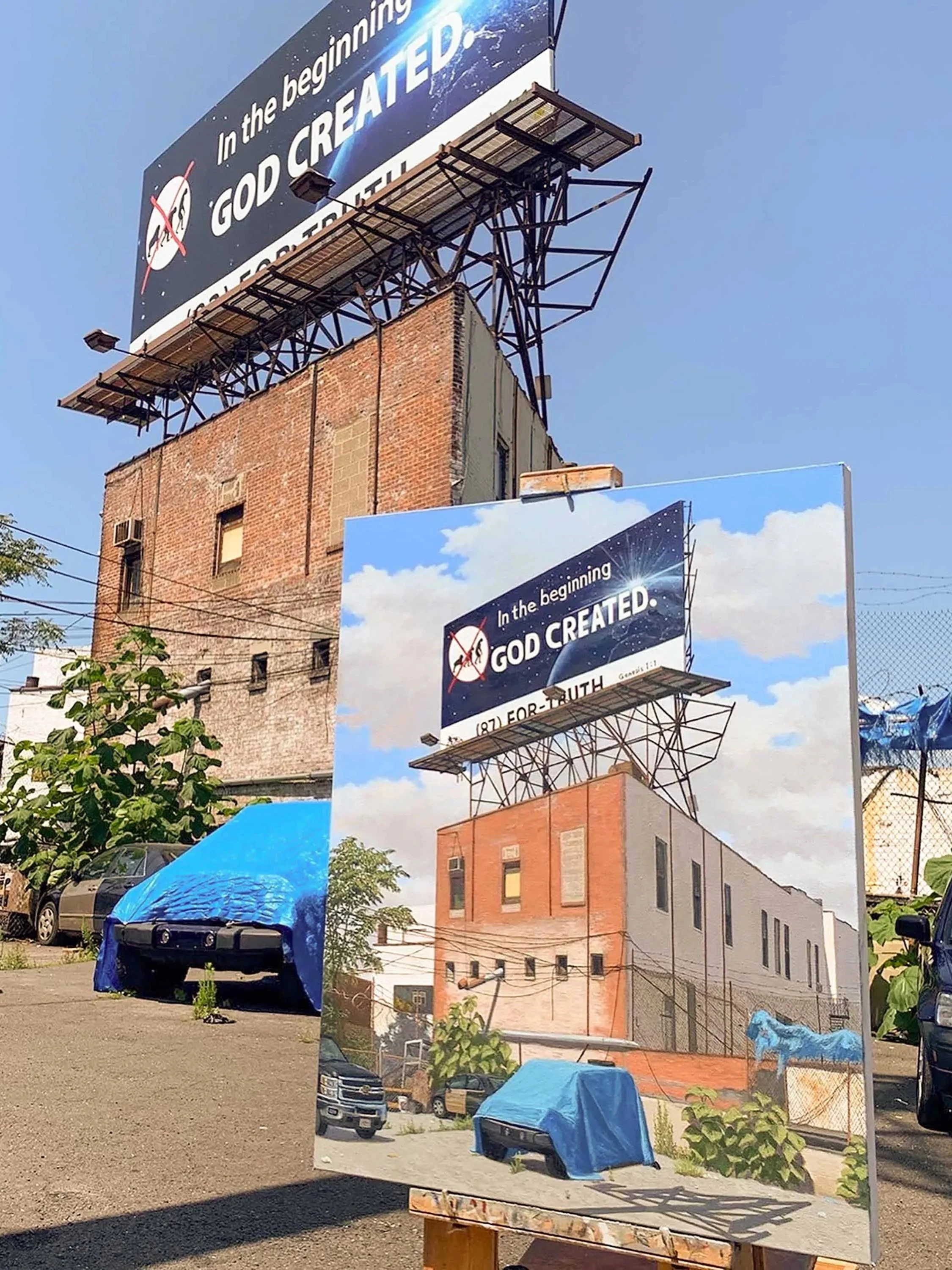
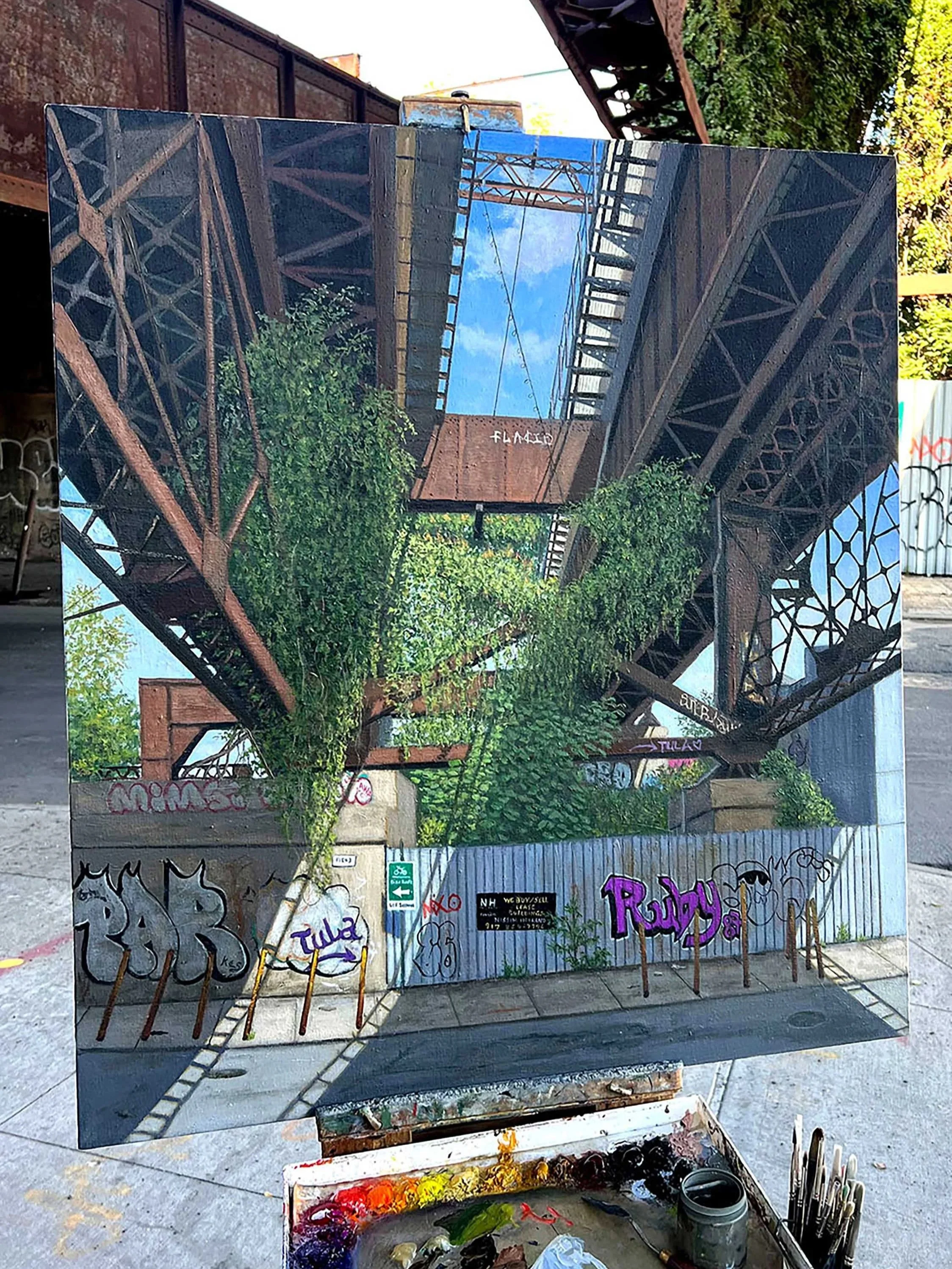
VL: Whenever the weather is good, I load up my car, aka my paint mobile, with my outdoor painting gear and I head out to paint for the day. I pack a lunch and if the weather is cooperating, I spend the day out in the field. Due to the changing light, I usually work on two paintings during the day, one in the morning and a second painting in the afternoon. Each painting session lasts around three hours, more if the weather is overcast. After three hours the light drastically changes. A large painting can take me two to three months to complete on site. My outdoor painting season typically lasts from mid-March to mid-December. In the winter months, I do smaller paintings from the relative comfort of my car. I use the steering wheel along with some masking tape as a make shift easel if I’m working on a gouache and watercolor, or a pochade box if I’m painting a small oil. Winter is also a good time to finish my studies. For all of my major paintings, I do a quick color study to make sure I’m happy with the composition before stretching the large canvas and going back on site for months to complete the large version. In the winter, I go back into the studies and add the details using the large painting as reference to complete the small study. This is why I call my studies “finished studies”.

TV: This is an incredible process. It takes some amazing dedication for each painting, knowing you will be back in that spot for months on end.
VL: I’m so fortunate that I found painting early in my life and that it continues to engage and nurture me many decades later. I like to jokingly say, my whole life has been art therapy. Art heals and it certainly did that for me. Additionally, I’m never bored. When you’re an artist, there’s no retiring. I expect to keep painting until I can’t hold a brush anymore, and that is a wonderful thing.